Cotton & Overlocked Elastic Panel Underbust Corset By Thomson's Glove Fitting
Date: c. 1921
Origin: USA
Fabric: Herringbone cotton coutil, elastic
Brand: Thomson’s Glove Fitting by Langdon & Batcheller
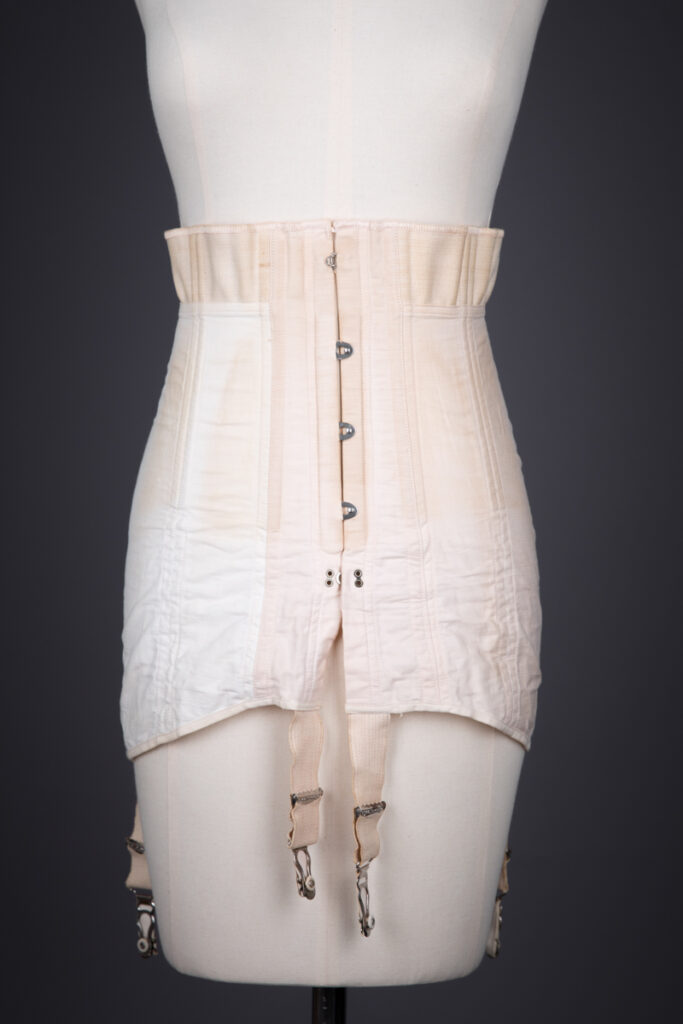
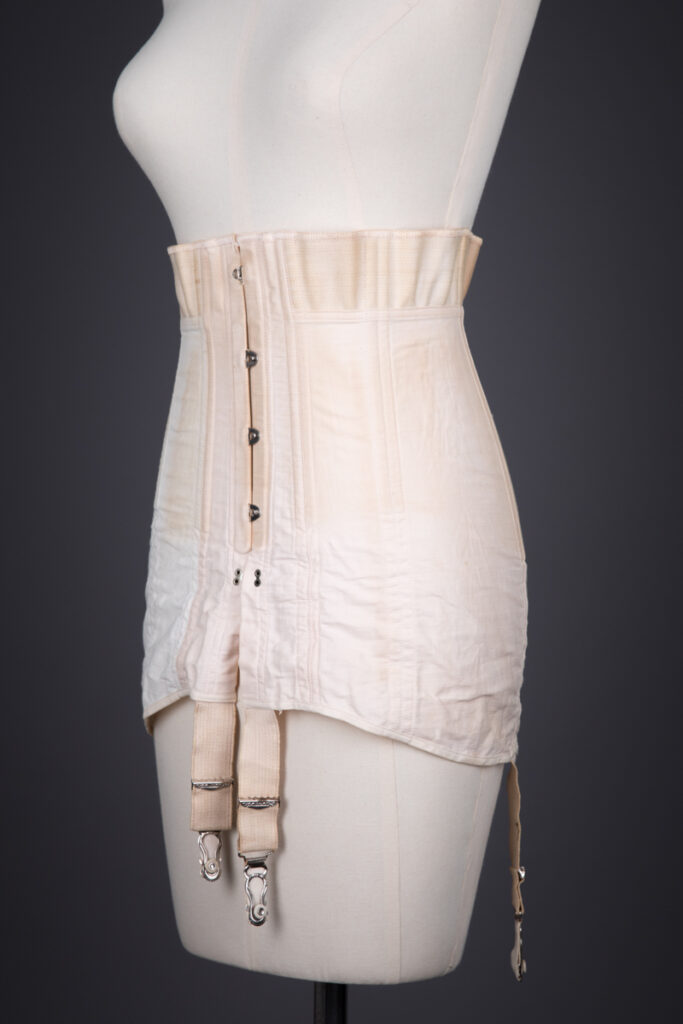
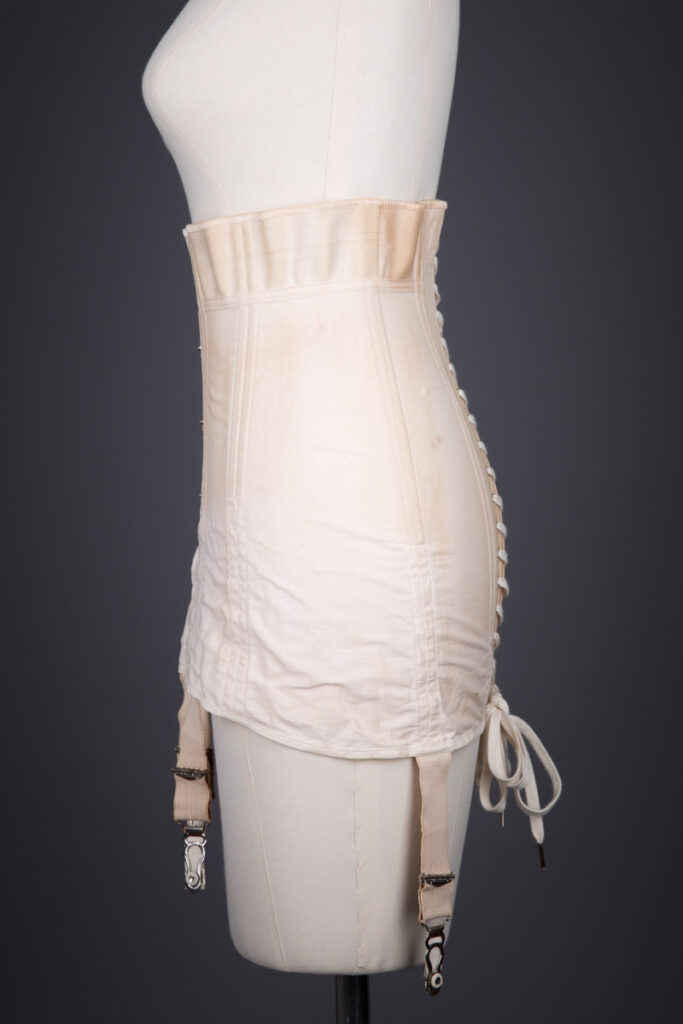
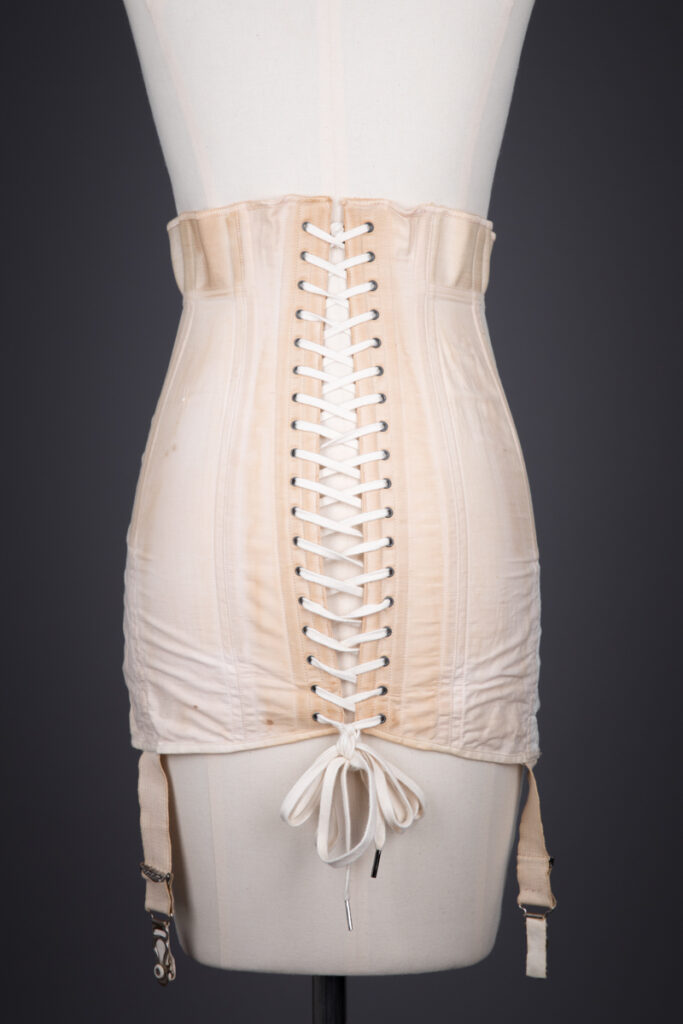
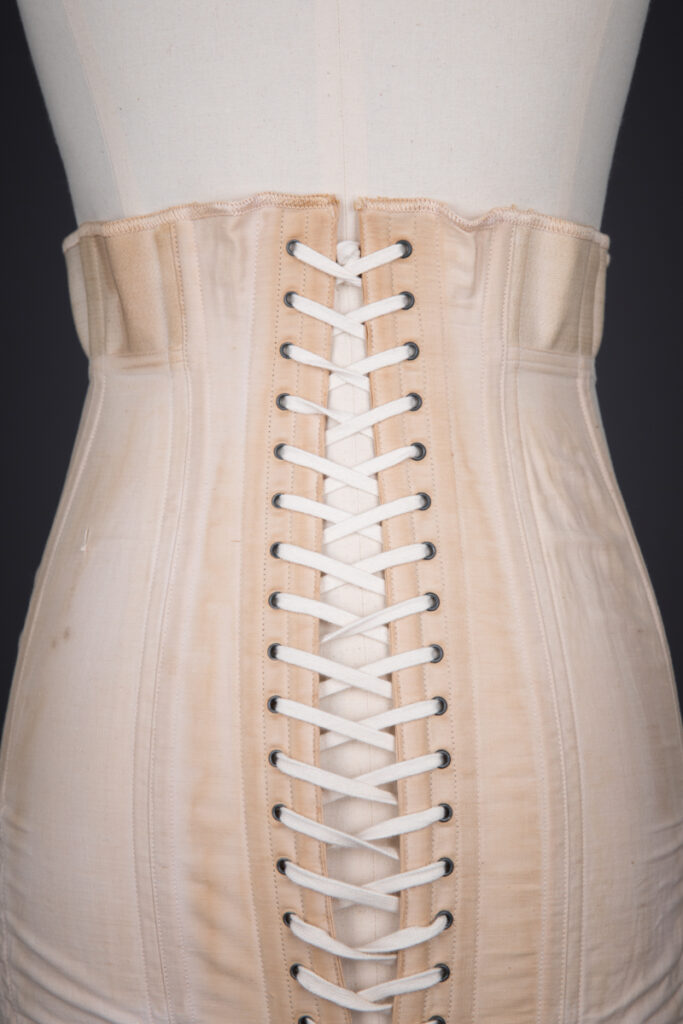
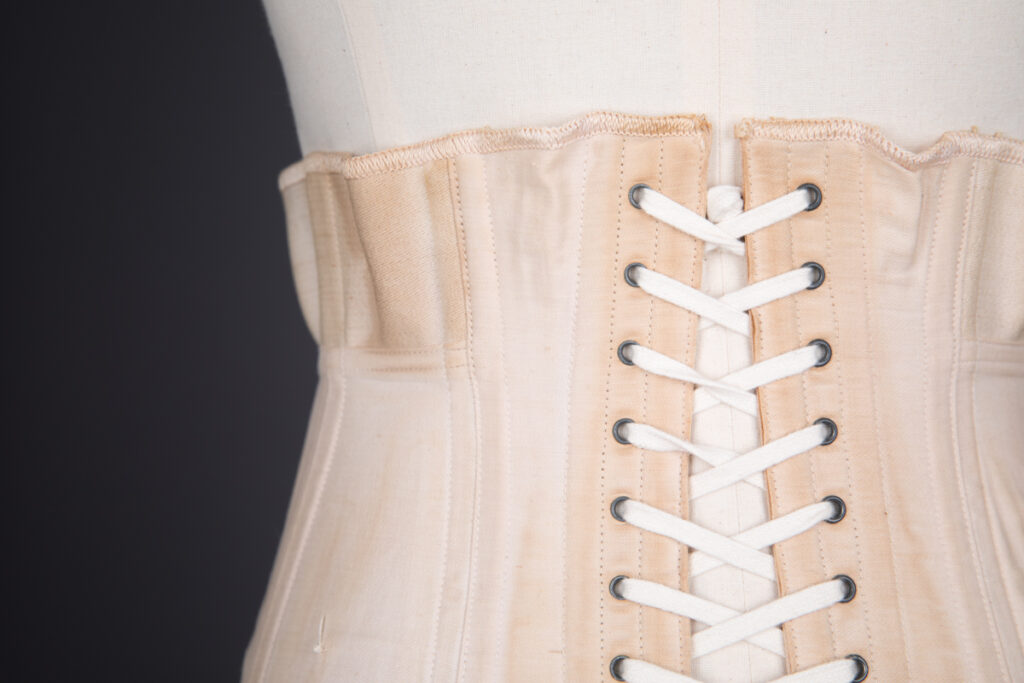
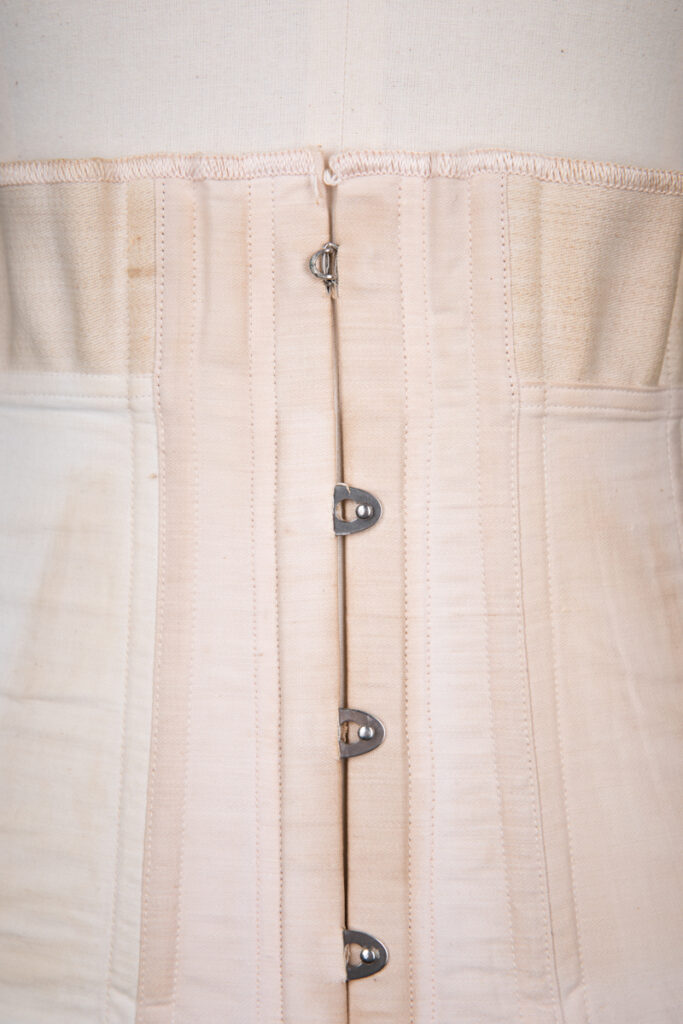
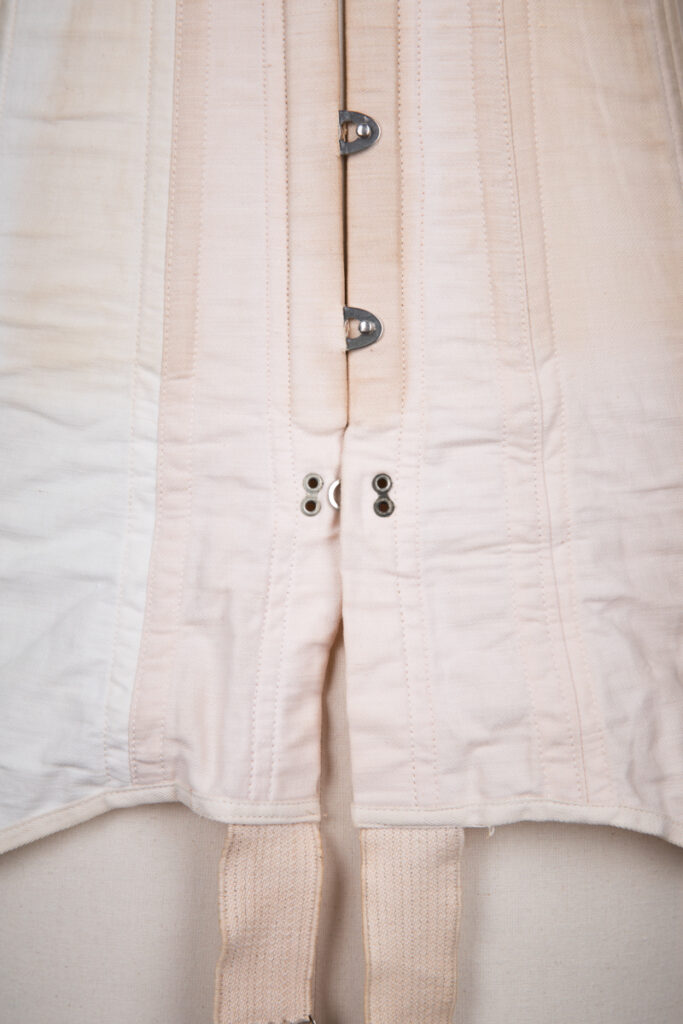
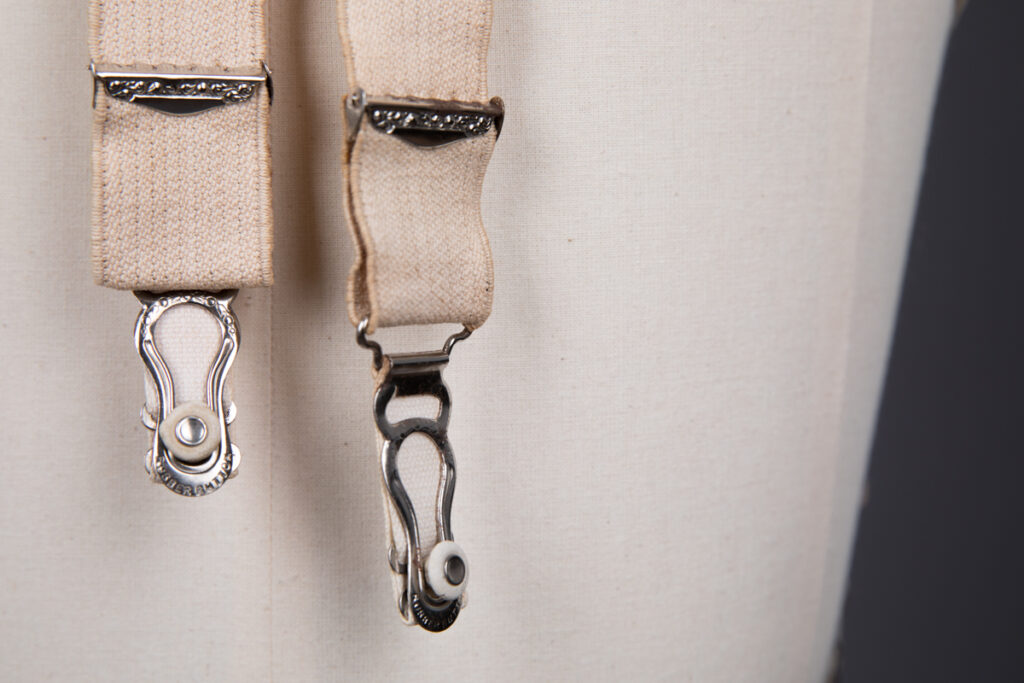
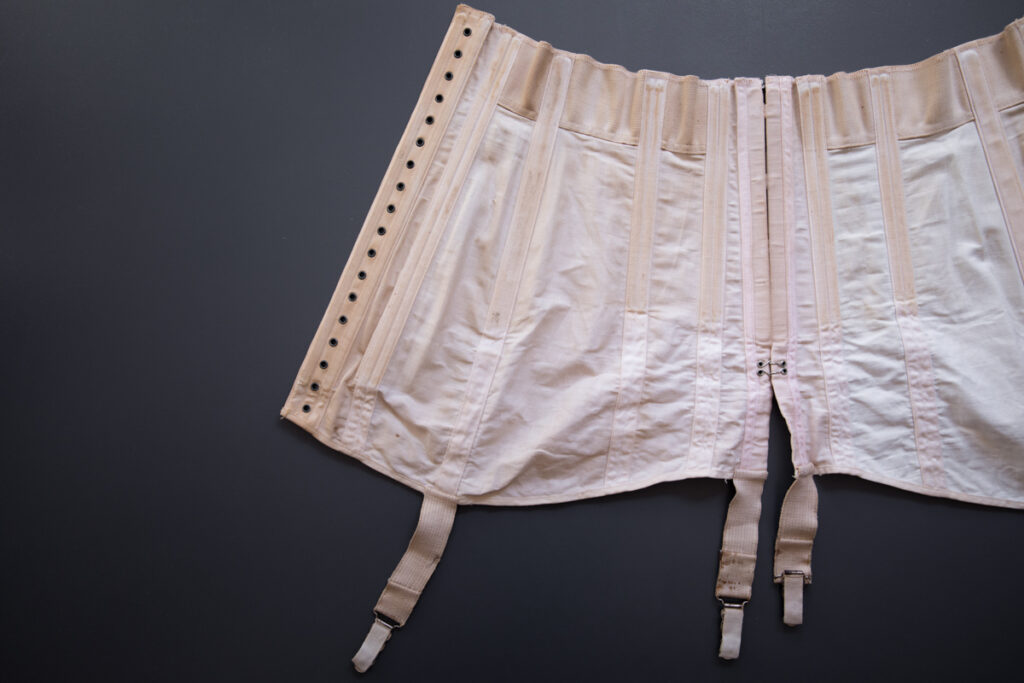
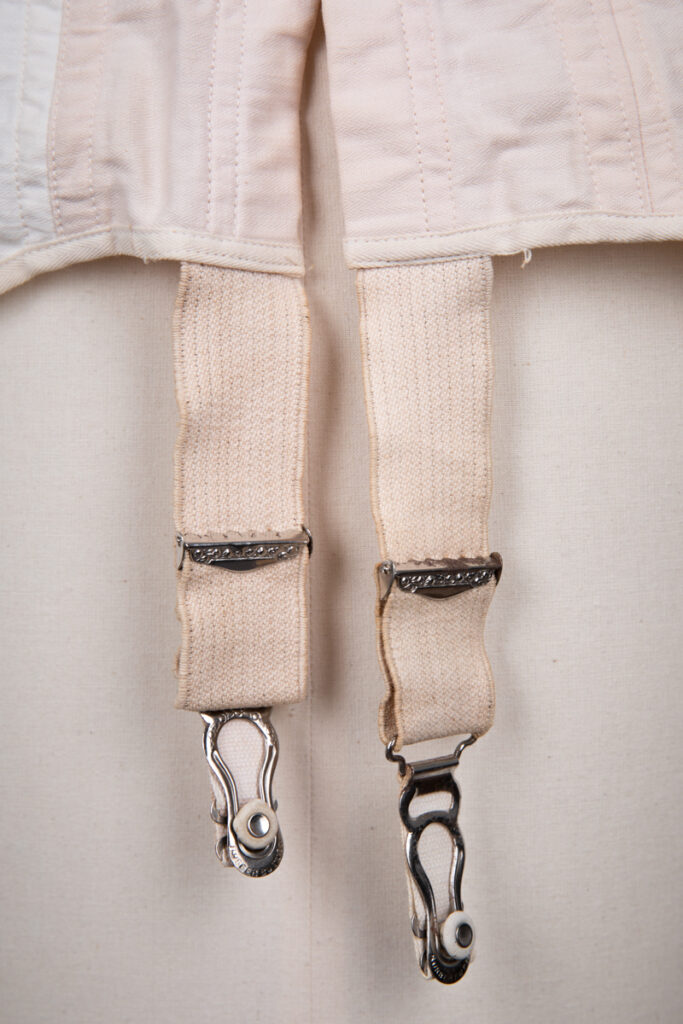
This cotton and overlocked elastic panel underbust corset, referred to as the “Thomson’s Glove Fitting” range by Langdon and Batcheller, dates to circa 1921. Constructed with panels of elastic at the underbust for additional flexibility, with herringbone cotton coutil through the rest of the body. The elastic panelling is cut from a larger fabric and is finished with an overlock stitch, rather than being made from a finished trim. There is a metal busk and hook and eye fastening at the centre front, four adjustable elasticated garter straps, and a lace up back with metal eyelets.
European women’s fashions in the postwar period generally diverged into two distinct stylistic paths: one style, commonly referred to as the “garconne” look, was the very antithesis of the recently popular “romantic” styles popularized by designers such as Lucile (Lady-Duff Gordan), and Jeanne Paquin around the time of the war. Championed by designers such as Gabrielle Chanel and Jacques Doucet, this new look idealized youthfulness, simplicity, and androgyny. It was epitomized by silver-screen beauties, most notably Joan Crawford as the fun-loving flapper in Our Dancing Daughters (1928) and Louise Brooks in the psycho-sexual-melodrama Pandora’s Box (1929).
Undergarments followed suit: softer, stretchier, and more forgiving foundation garments replaced the more rigid corsetry of previous decades, designed to be worn under the straight, columnar shift dresses of this new, modern period. Youth-driven fashion increasingly prioritized a flattened, linear figure, often achieving this via the suppression of the natural curves of a woman’s body. Elastic undergarments such as this example would have been instrumental in achieving a slimming effect, necessary to maintain this deliberately androgynous look. This garment includes five metal hook-and-eye closures up the front, and adjustable lacing up the back, allowing for ease of wear and removal while still offering steadfast control and shaping.
An advertisement published in Ladies’ Home Journal in 1920 describes Langdon and Batcheller as “The Standard Corset of the World for 65 Years,” suggesting that the company most likely began producing and selling undergarments in 1855. As early as 1899, the firm operated at 345 Broadway, New York, and expanded to Chicago and San Francisco by April 1910. Ten years later, in 1920, they were located in New York, at 130 Fifth Avenue. A similar style was advertised within Good Housekeeping Magazine in April 1921.
Throughout the 1910s, Langdon and Batcheller marketed a range of underpinnings, including so-called “ventilating” corsets. The Underpinnings Museum collection houses a circa 1902 light-weight corset made of cotton tulle, made for wear in humid climates. Their advertising consistently emphasized qualities such as lightness, airiness, and affordability, key values in this new era which was increasingly being defined by movement, modernity, and female autonomy.
From the collection of Karolina Laskowska
Many thanks to Liv Elniski for the object description.
Museum number: KL-2022-082