
Erté: Feline Costumes for Bal Tabarin
Romain de Tirtoff, known professionally as Erté after 1913, is best remembered for his fashion illustrations exemplifying the glamorous Art Deco style. His decorated career as a costume designer, which spanned over six decades, is less well-known but just as impressive.
Erté: Feline Costumes for Bal Tabarin elebrates the museum’s acquisition of vintage costumes by Erté, designed to be worn by showgirls at the Bal Tabarin cabaret in Paris. It begins with an examination of Erté’s early career, including his first venture into theatrical costume design under the employ of avant-garde couturier Paul Poiret, and his designs for stage and screen during the “roaring twenties.” The second section highlights the history of Bal Tabarin, a venue frequented by tourists due to its reputation for being the home of the French can-can dance. Archival footage brings this lively venue to life.
These provide a foundation for the final section, revealing three risqué showgirl costumes by Erté, now in the collection of the Underpinnings Museum. These dramatic, sequined costumes are compared alongside souvenir album photographs of the same costumes being worn in Parisian revues Un Vrai Paradis, during the Nazi occupation of Paris, and Reflets, during the postwar period. Throughout, the story of Erté’s design talent is blended with the history of cabaret and showgirl costumes.
New To Our Collection
Explore the latest additions to the digital archive.


Blog posts
-
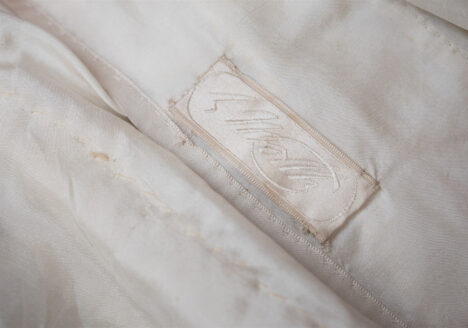
Conserving A 1920s House Of Worth Gown
This guest blog post was kindly written by Annika Cilke. Annika Cilke is an independent textile conservator based in Oslo, Norway. She holds an MPhil in…
-
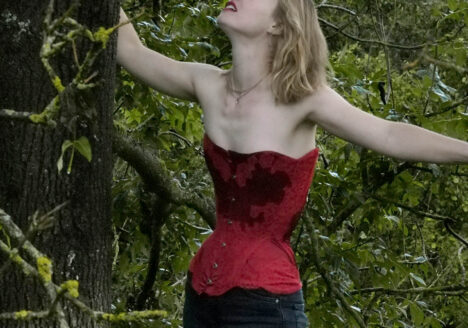
Sparklewren Autumn 2020 Lookbook: ‘Bless The Weather’
Although the Sparklewren brand is still on indefinite hiatus, earlier this year designer Jenni Hampshire was inspired to create this capsule collection. The corset bases…
-
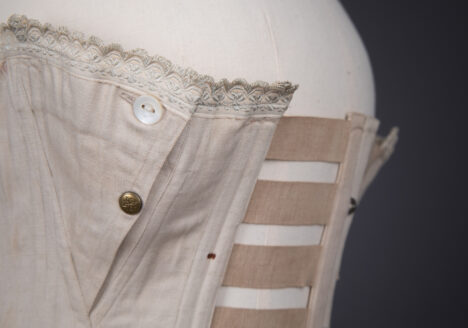
The End of Maternal Corsetry
The end of the nineteenth century was marked by several political, economic and social changes that permanently affected the fabric of Western communities. To understand how these changes were reflected in the lives of ordinary people, it can be useful to explore their effect on clothing and more specifically, women’s undergarments. The changes that occurred in breastfeeding garments from 1900-1945 illustrate how social, economic and medical practices shaped the objects being designed during that time.
-
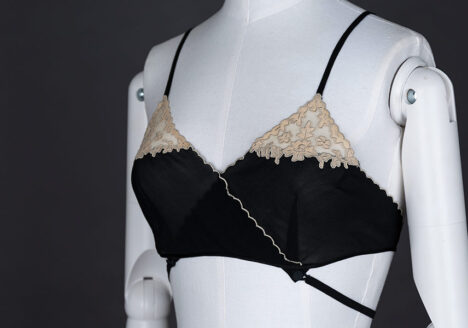
Rosamond Lilian Klin: The Inventor Of The Kestos Bra
The Kestos lingerie brand has long been one of my favourite in the grand scheme of lingerie history; the ‘Kestos’ bra is an iconic design…
-
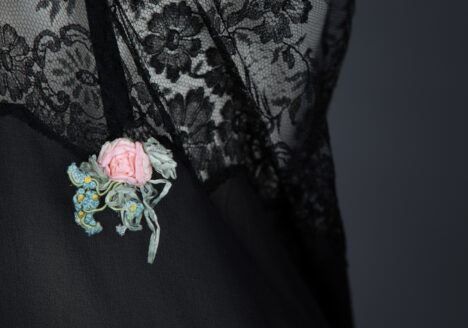
Favourite Things: Ayten Gasson
Another installment in our blog series ‘Favourite Things’, where we ask lingerie industry professionals to pick a favourite object from our collection. Today’s selection comes…
-
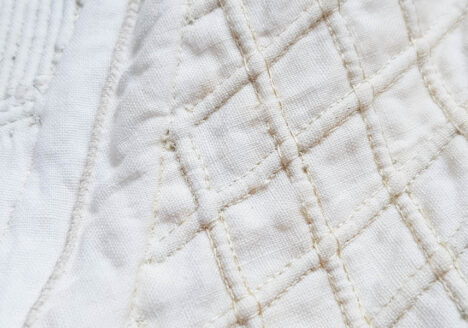
New Acquisition: c. 1830s Corset
Earlier this year, The Underpinnings Museum ran its first major fundraiser since 2016’s Kickstarter (the crowdfunding campaign that helped us to launch this website). We…