
Chapter 2: Satin Cathedral Bra With Celluloid Boning
Whilst this early rendition of the Cathedral bra style may not have the most complex of patterns, it still offered great challenges to Macarena Prada Leis in the stitching and material sourcing processes.
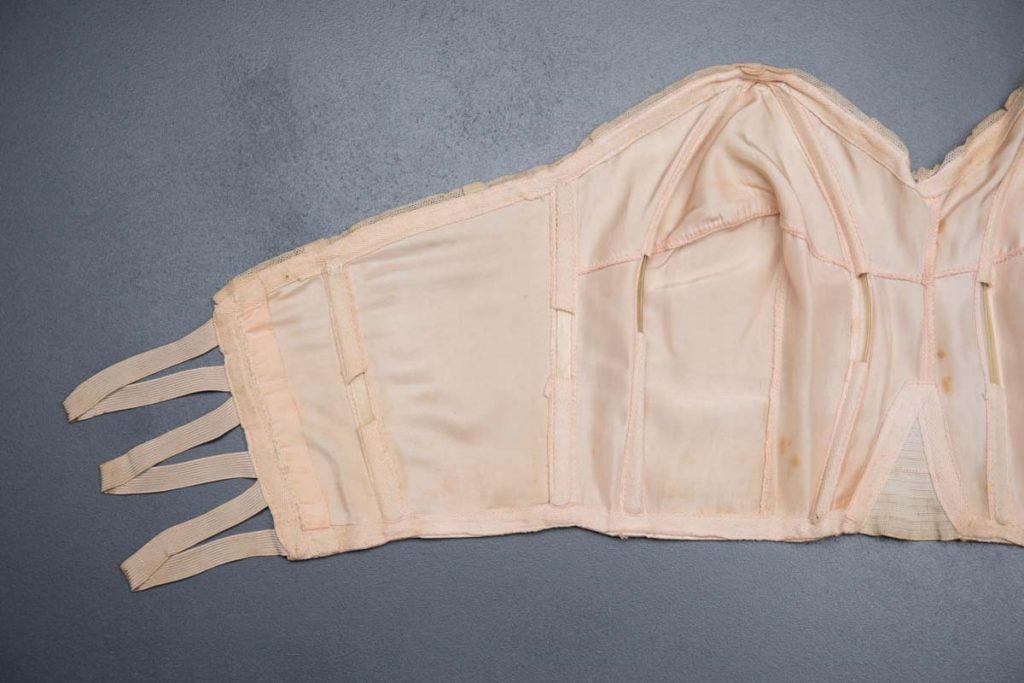
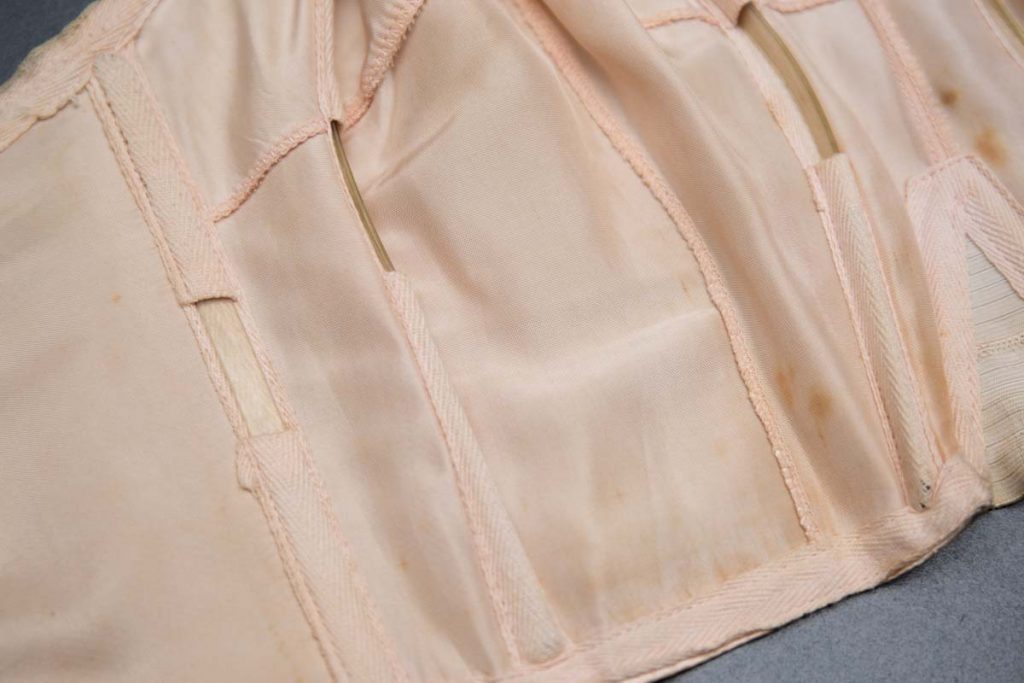
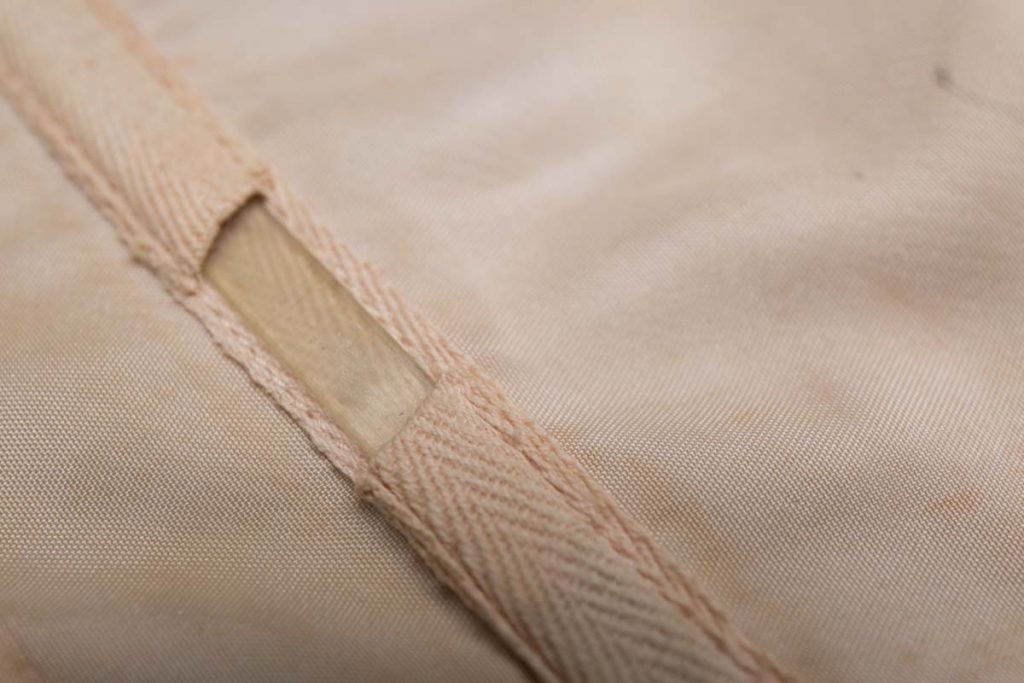
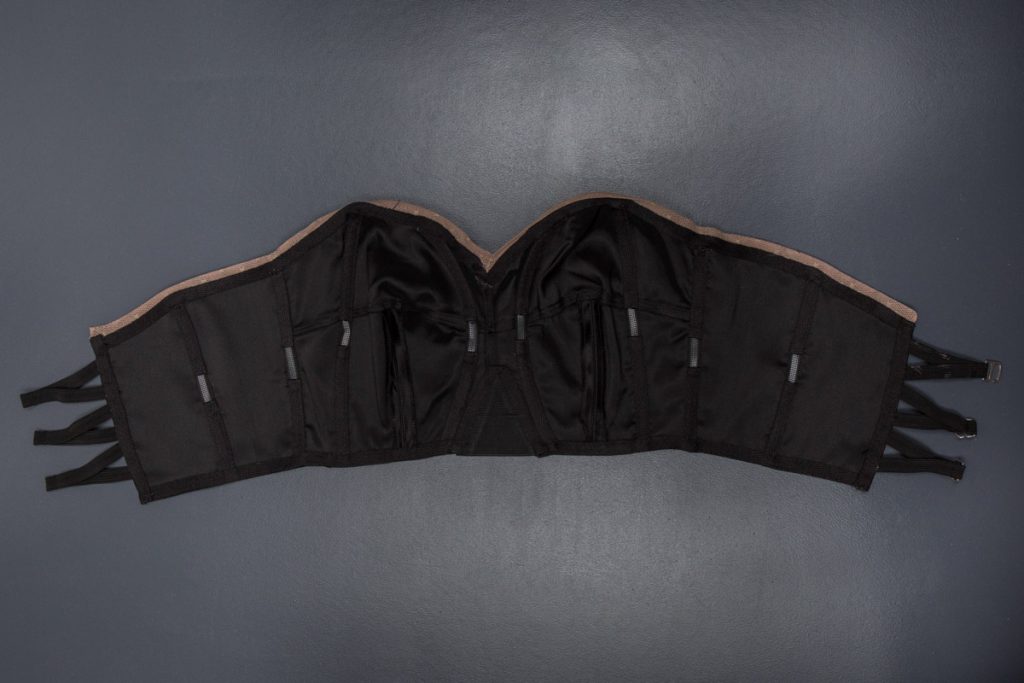
The original bra was boned with celluloid: an early form of plastic that faded from popularity in underwear after the 1930s, due to its instability (it is highly flammable) and brittleness, with most foundationwear designers opting for steel bones. Sourcing celluloid bones for this project simply wasn’t feasible, but fortunately modern material developments mean that there is now a greater range of much more stable plastic bones intended for clothing. ‘Rigilene’ plastic boning gives a similar level of support to the original celluloid boning, and can be seen in the open casings on the garment interior.
The heavy weight rayon satin that forms of the body of the bra was an incredibly common lingerie fabric when the garment was originally made. With advances in fibre technologies, this fabric has fallen almost entirely out of favour in contemporary design. Today’s lingerie industry favours the newer synthetic fibres of nylon and polyester over rayon, making it difficult to source an appropriate weave and weight of fabric to replicate the original bra.
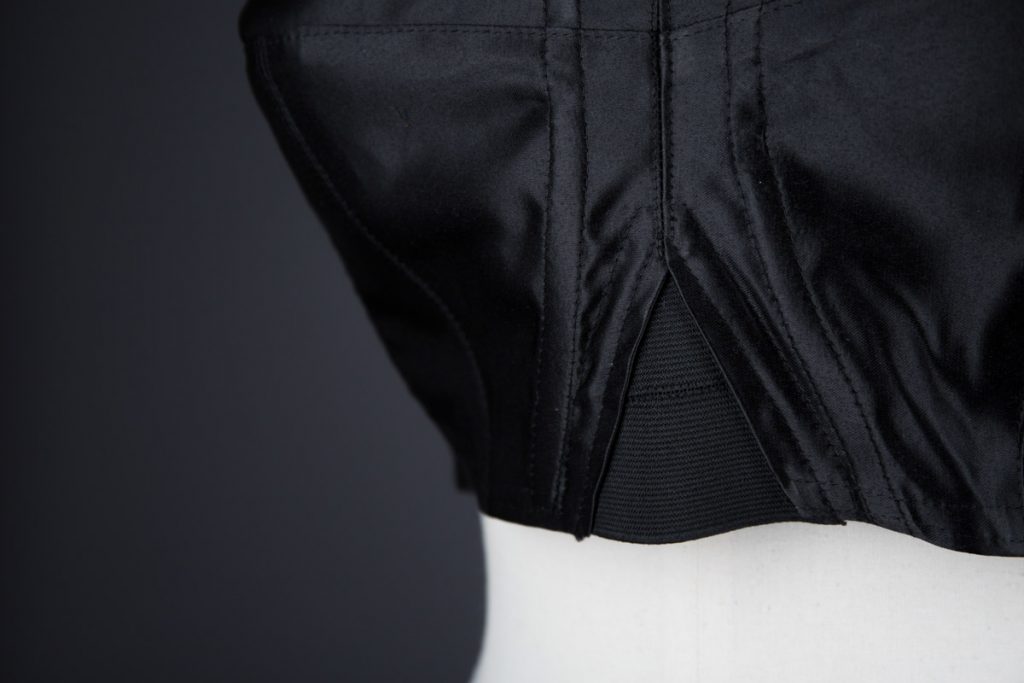
The bra contains a number of challenging stitch operations: most notably the pointed elastic insert at the centre front with bias taped seam allowances, and the interrupted bone channels throughout the garment. Exceptional care, skill and time were required to execute these stitch operations so accurately; whilst such techniques may have been fairly commonplace in lingerie during the 1930s, they are rarely seen in contemporary clothing.
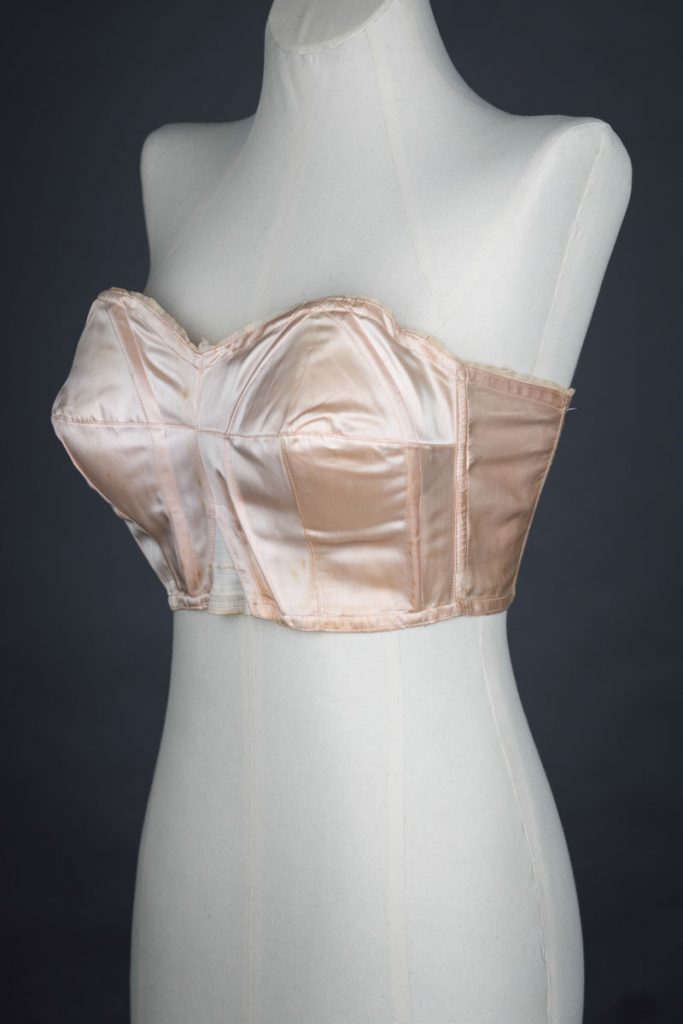
Satin Cathedral Bra With Celluloid Boning By Rita Ro
Date: c. 1930s
Origin: Spain
Fabric: Rayon satin
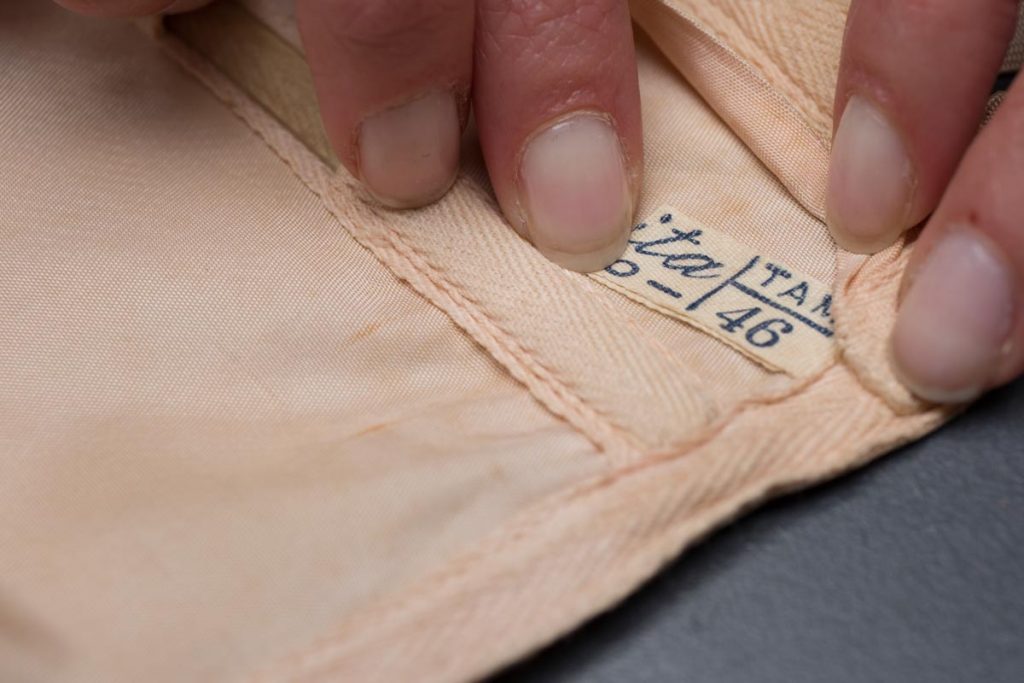
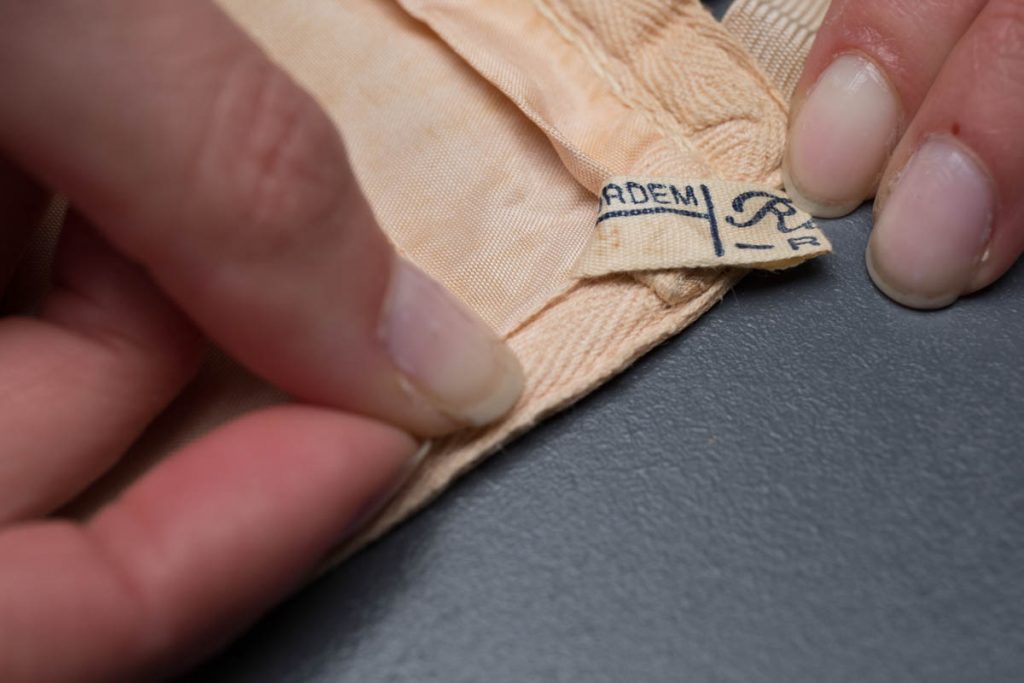
Brand: Rita Ro
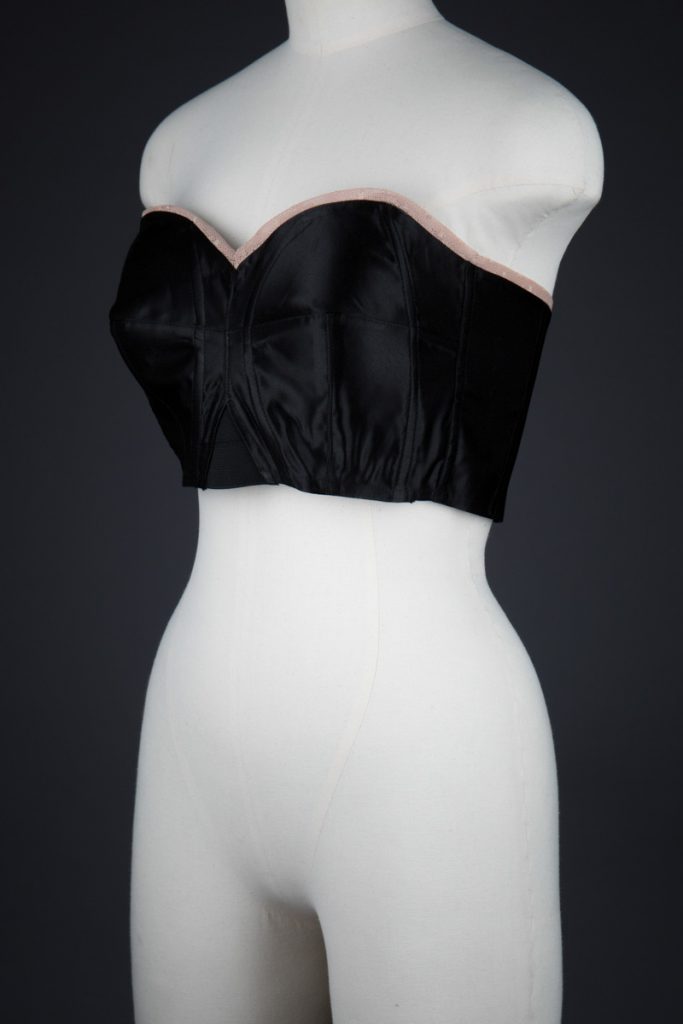
The cathedral bra is a style that is often associated with the 1950s, but was in fact first created in the 1930s (as was the case with the spiral stitch ‘bullet’ bra). The name ‘cathedral’ refers to the manner in which boning is placed on the bra, as it is supposedly reminiscent of arches within the aforementioned architectural structures. The structure of the bra is designed to lift and point the bust shape. The 1930s were a time period were brassieres were beginning to grow in popularity as they helped women to achieve the fashionable silhouettes of the era.
This bra is constructed with a main fabric of rigid and sturdy rayon satin with an elastic gore insert at the centre front. It is entirely machine stitched, with a combination of twin needle lockstitch along the top and bottom edges and along the bone casings, with other seams sewn with a delicate narrow overlock stitch. The top edge of the bra has a narrow trim of folded cotton bobbinet tulle, with the top and bottom hems folded in and taped over with cotton twill tape. The bone channels also use this tape to encase bones.
It is worth noting that the bone channels in this garment are interrupted, leaving the interior celluloid boning partially visible. It is possible that this is either intended to display the unusual technology used in structuring this garment, or to allow the bones to be removed when washing the garment.
Celluloid is an early plastic, and saw a certain amount of popularity in the 1930s, used in components such as bra strap adjusters. The use of celluloid was soon replaced with other plastics such as bakelite, arguably due to the fact that celluloid is relatively unstable and flammable.
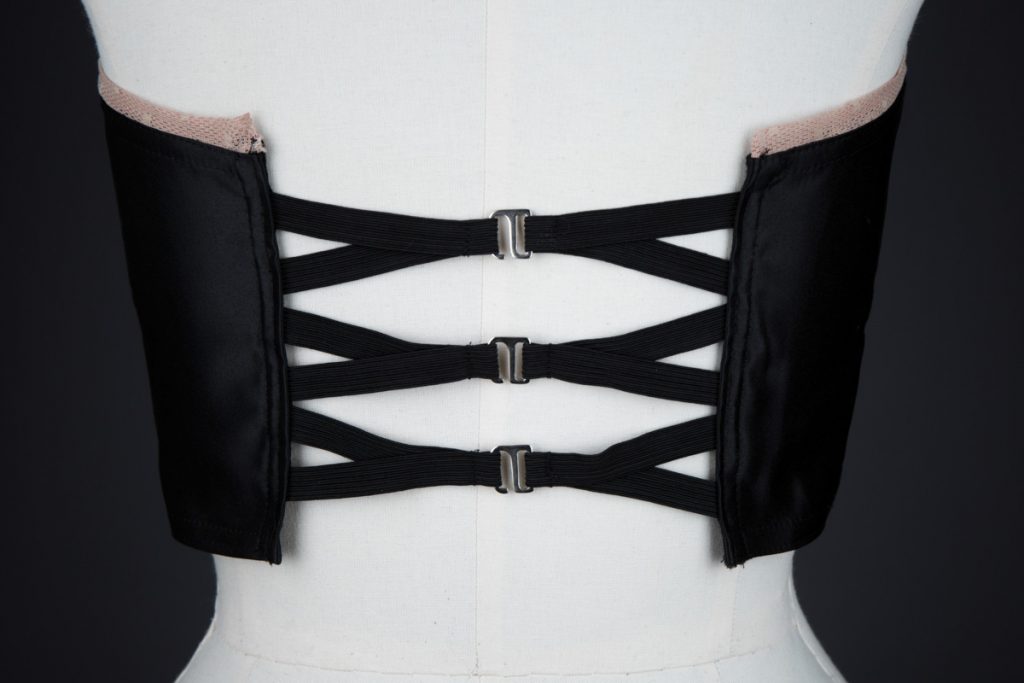
The bra fastens at the centre back with three rows of elastic loops on each side, with enamelled metal hooks. This use of elastic provided a certain level of fit flexibility, when many of the garments of this period had a very rigid and unflexible fit.
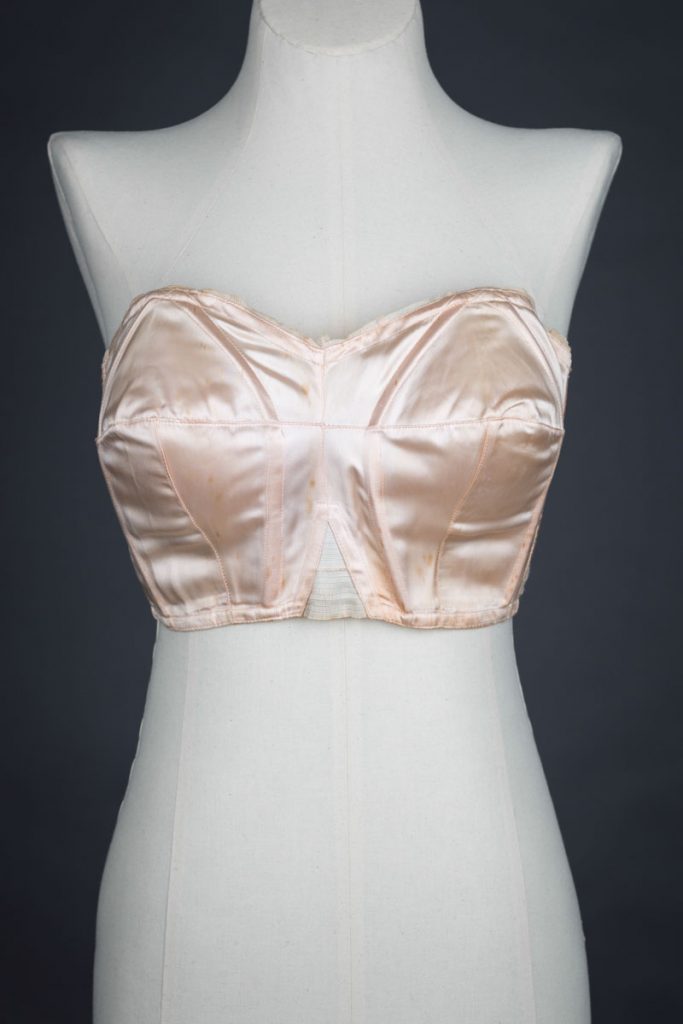
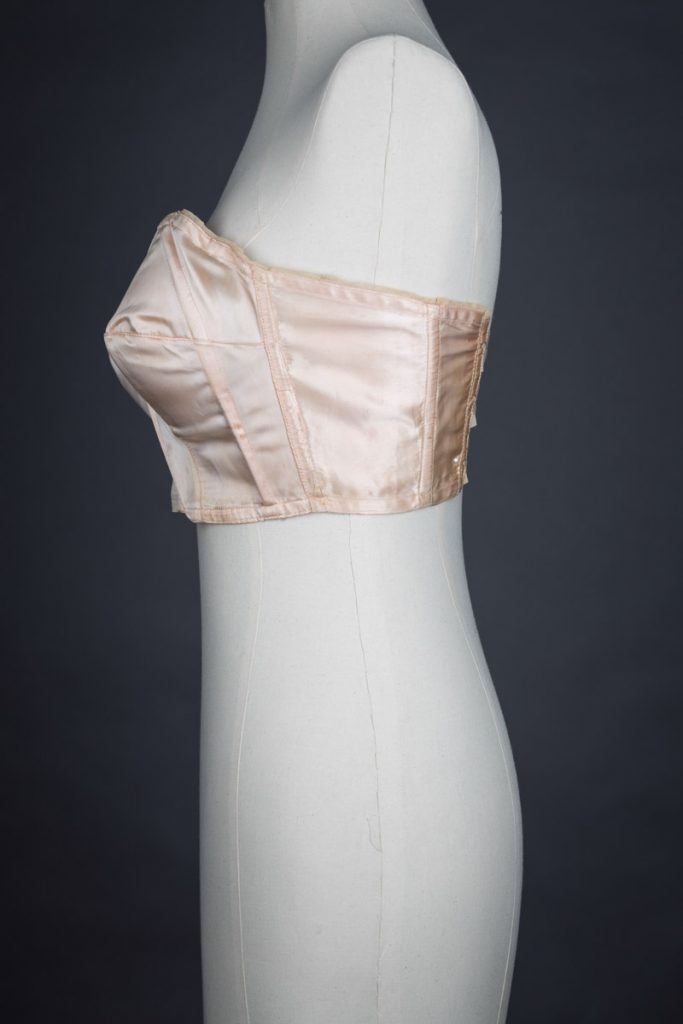
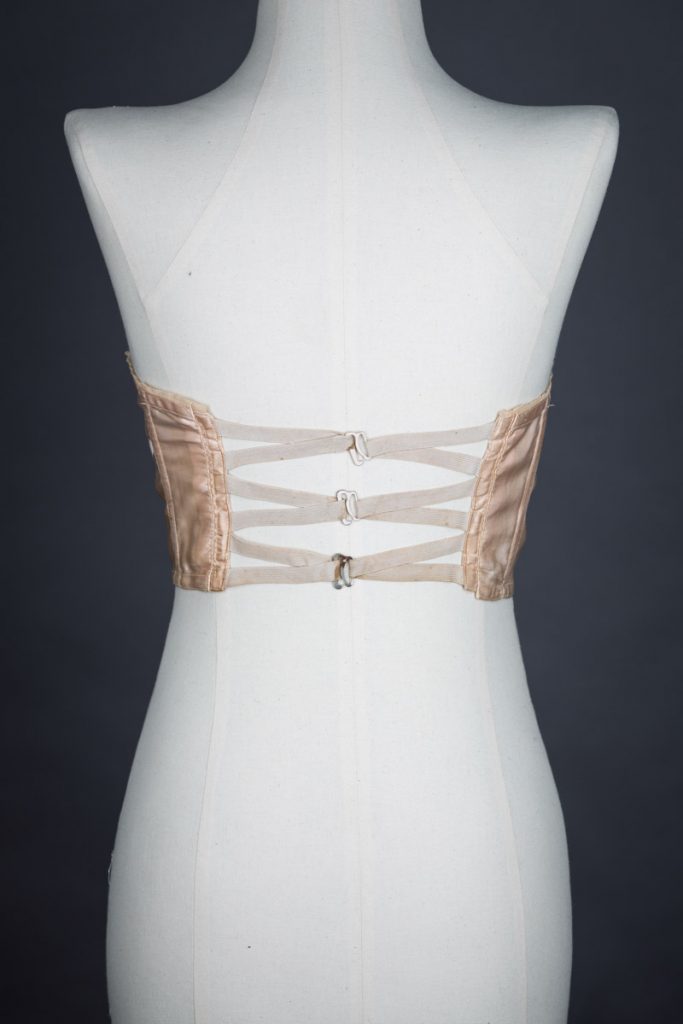
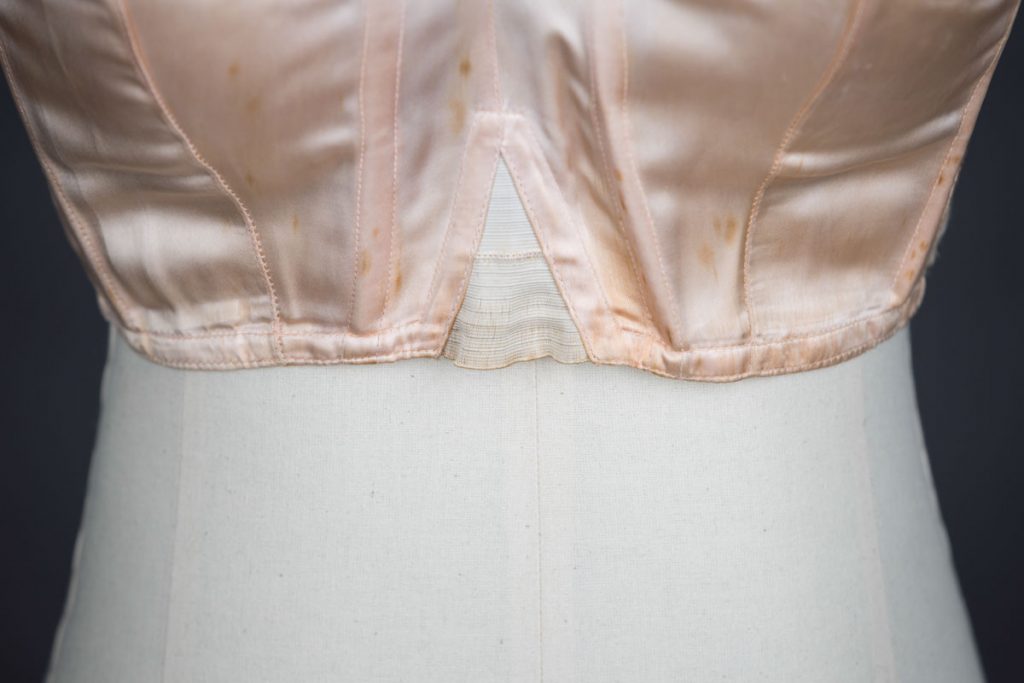
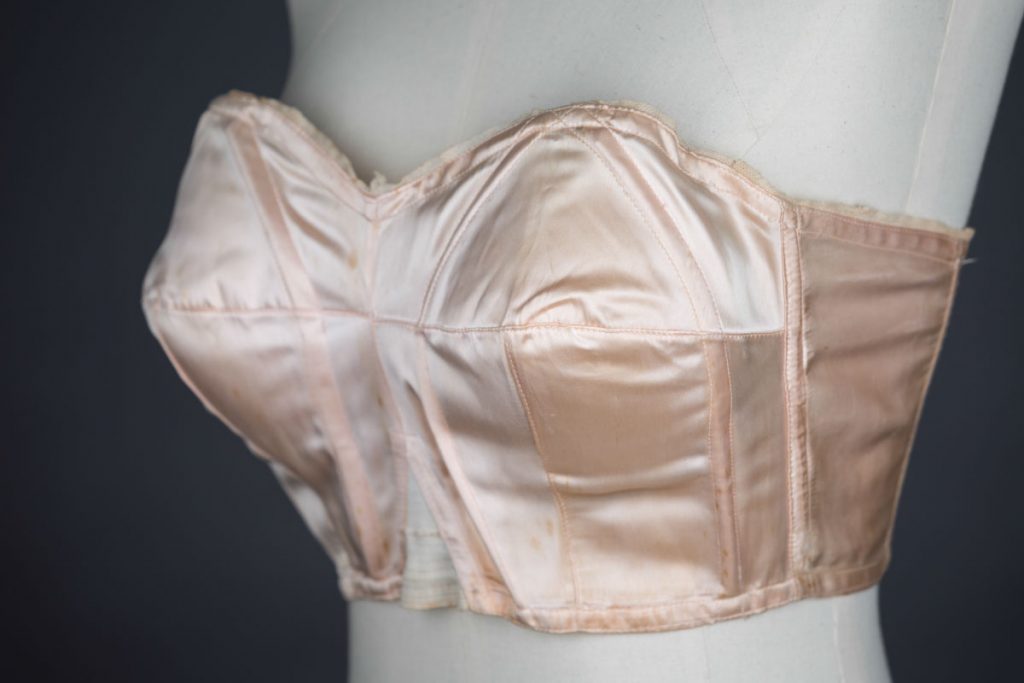
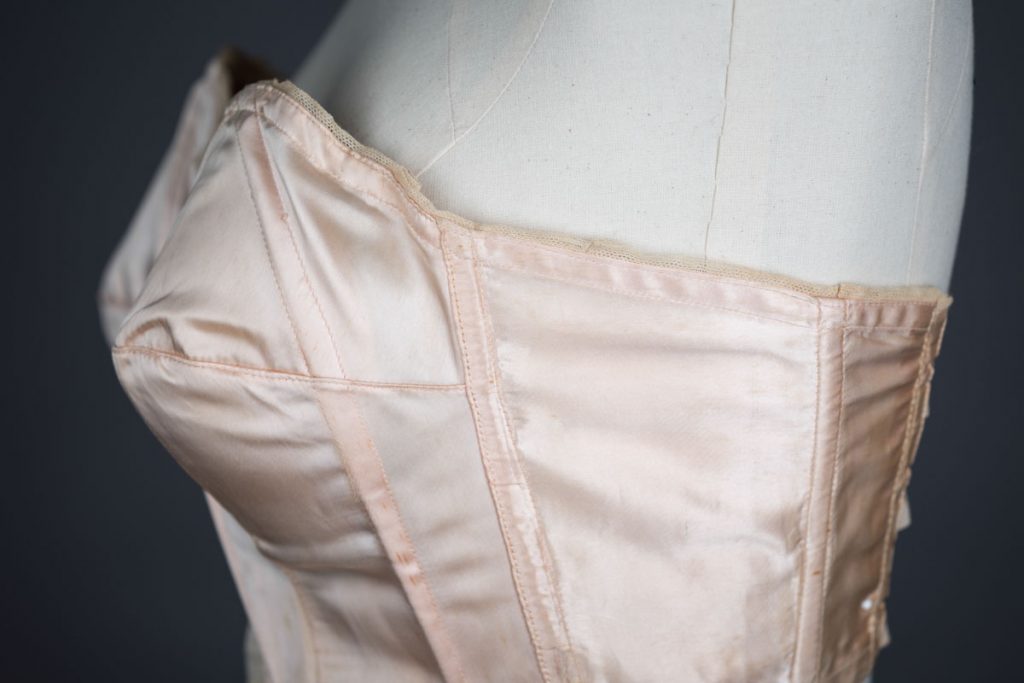
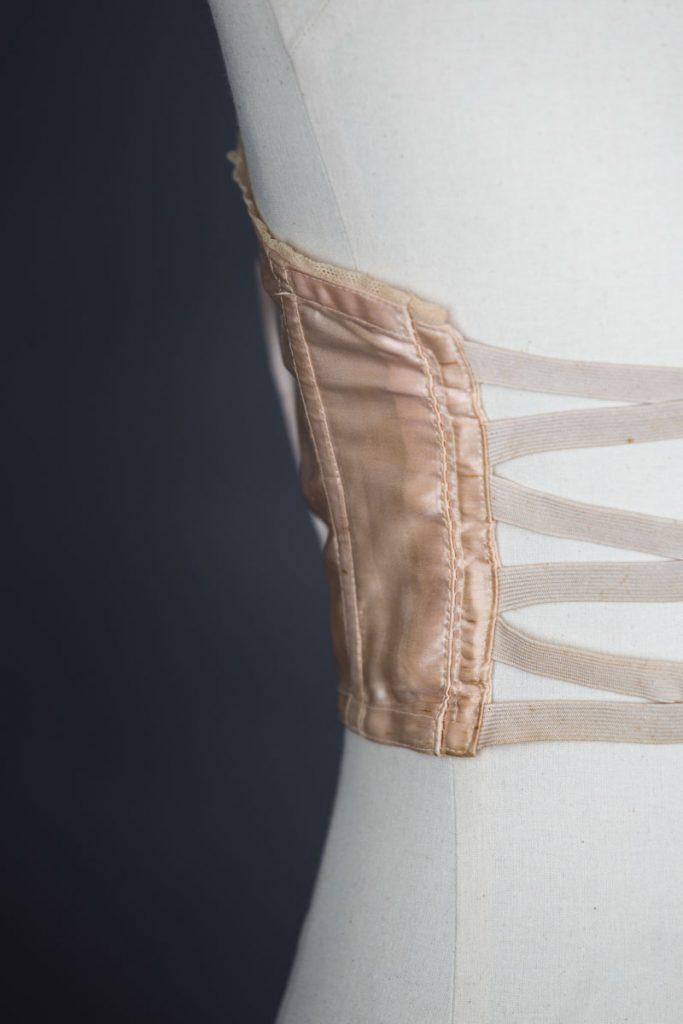
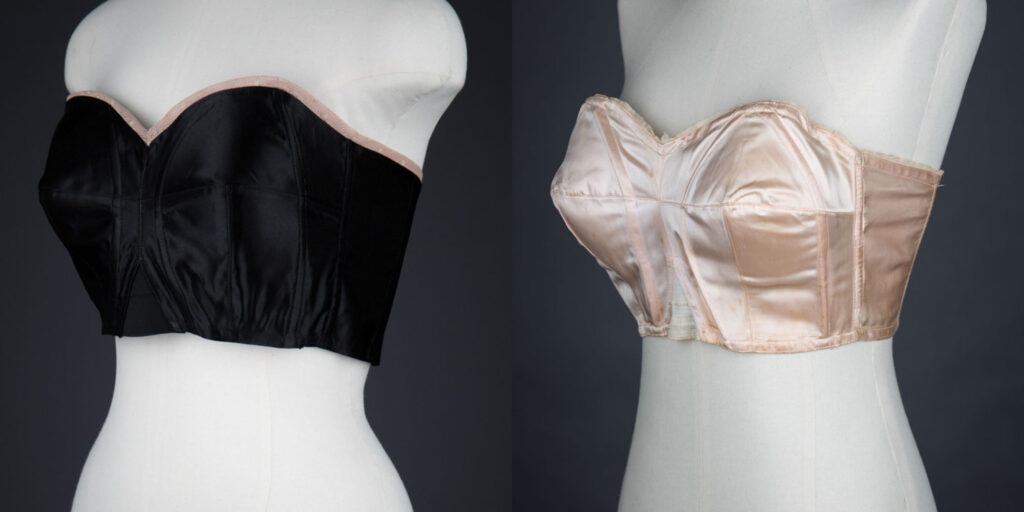
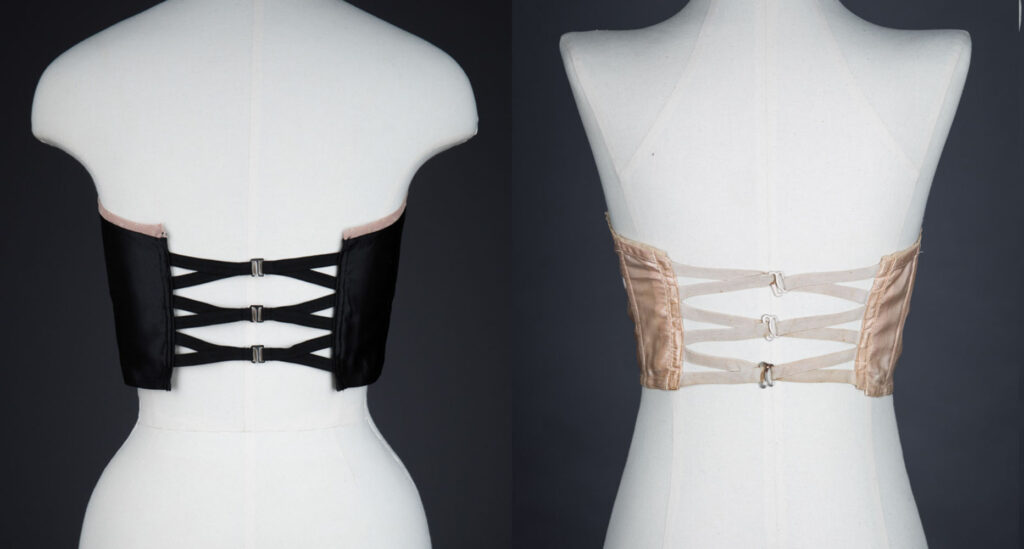

Reproduction Satin Cathedral Bra With Celluloid Boning By Rita Ro, by Macarena Prada Leis
Date: 2017
Origin: United Kingdom
Fabric: Satin
Made by Macarena Prada Leis, MA Pattern & Garment Technology, London College of Fashion
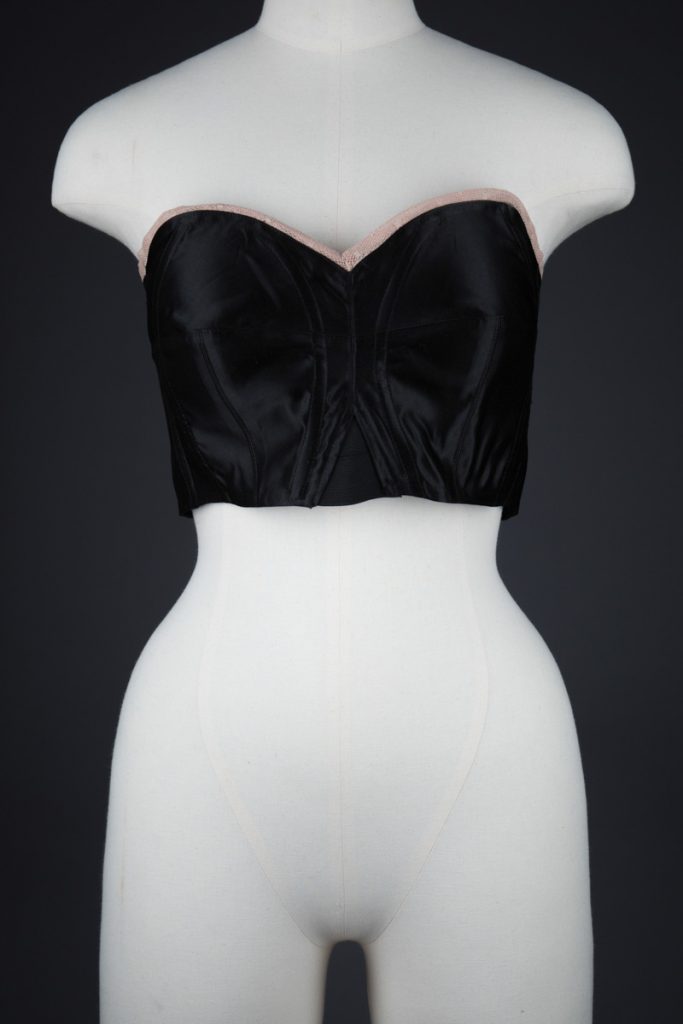
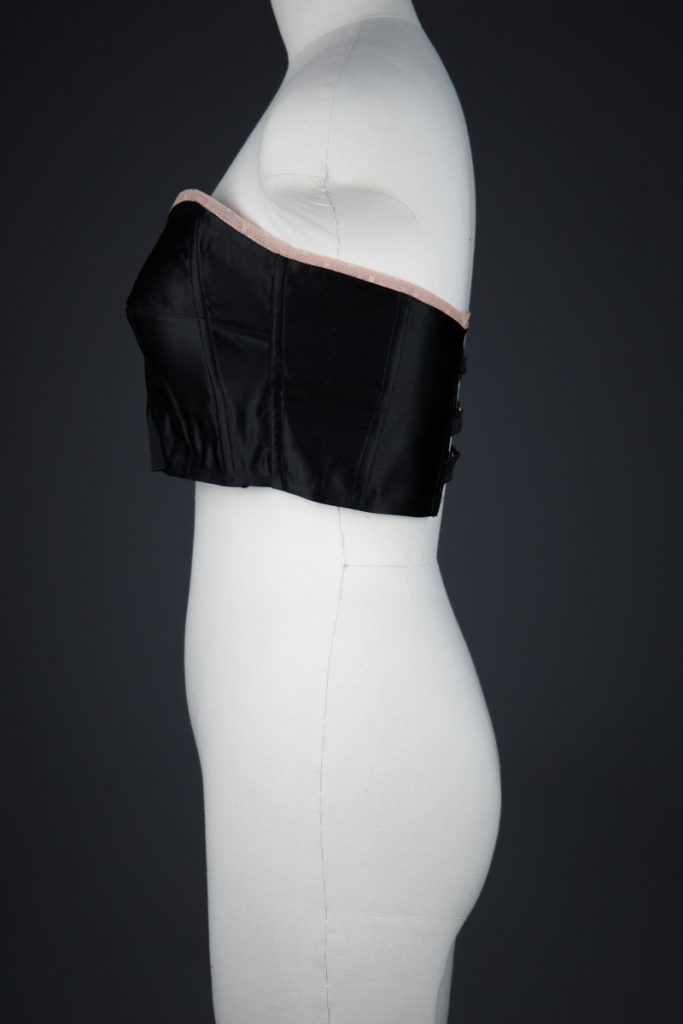
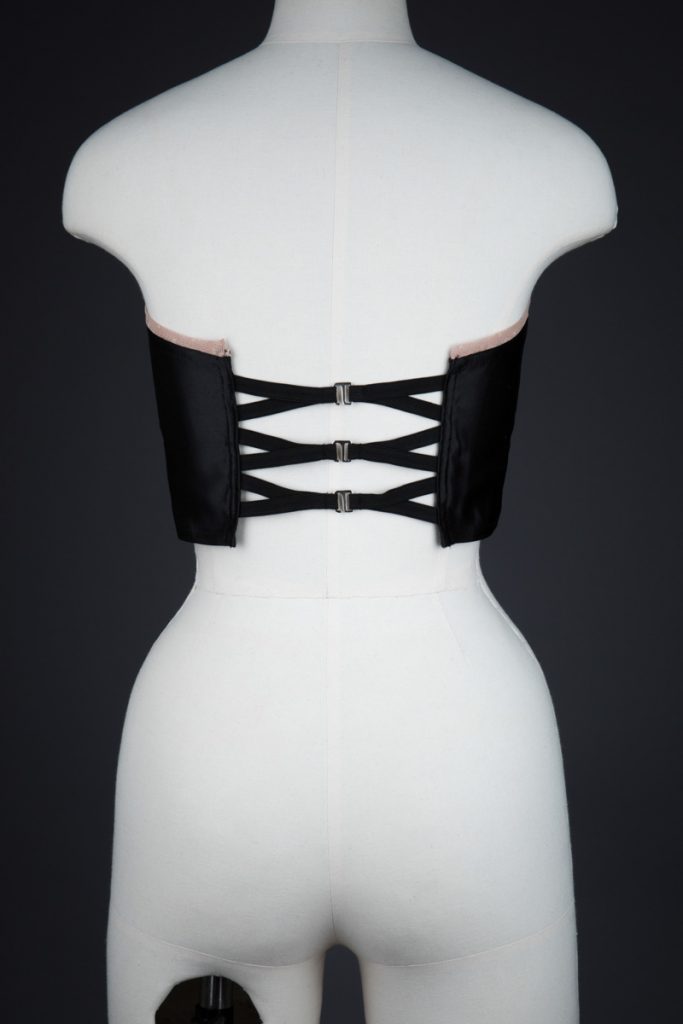
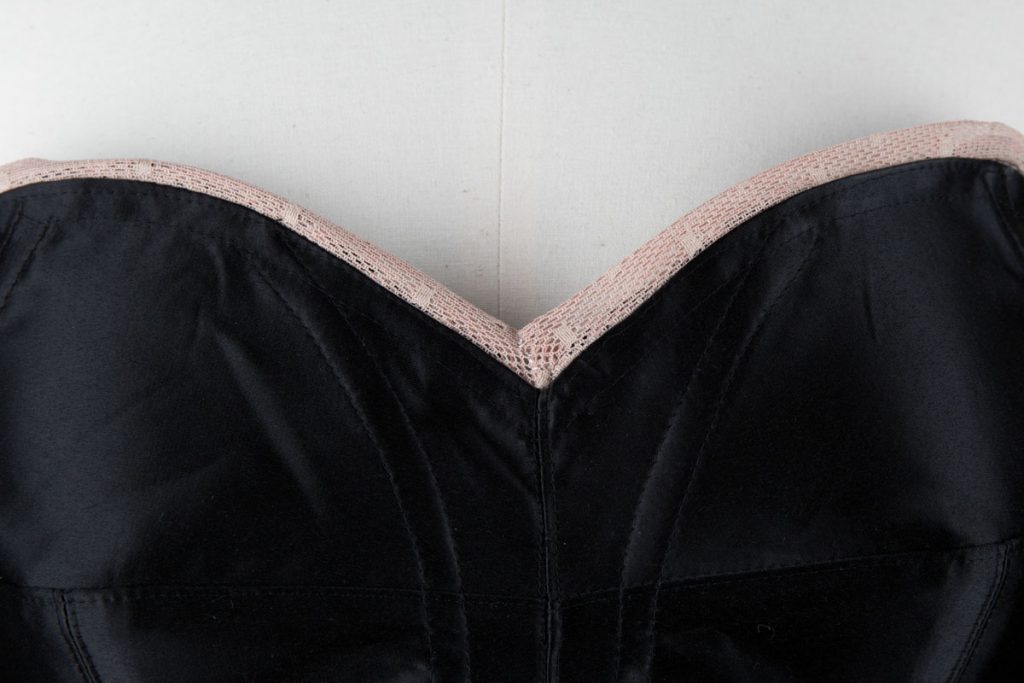
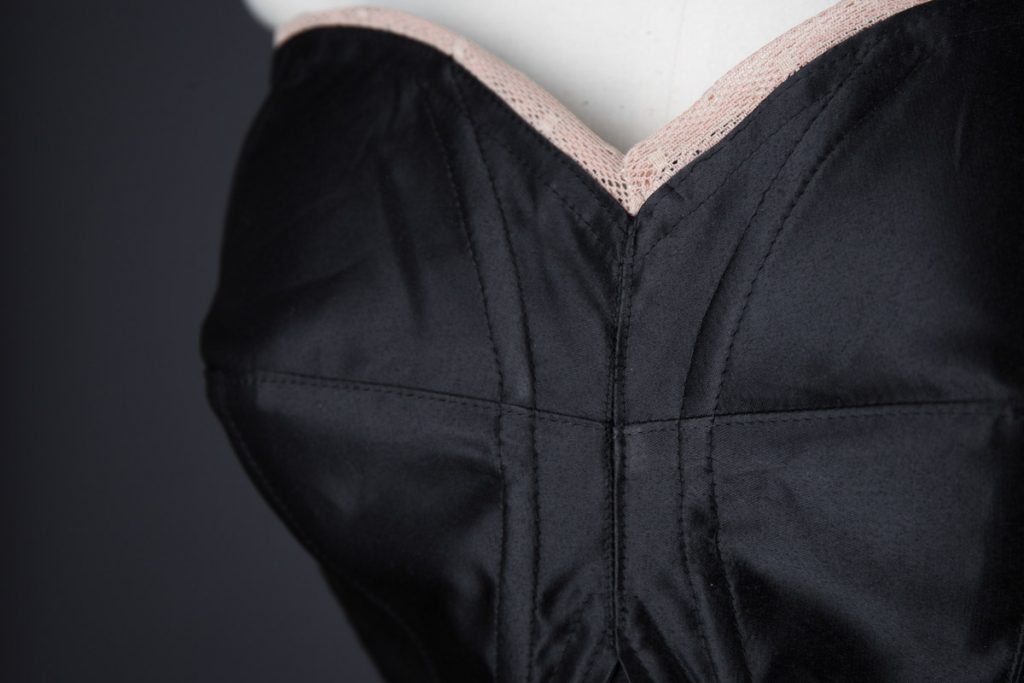
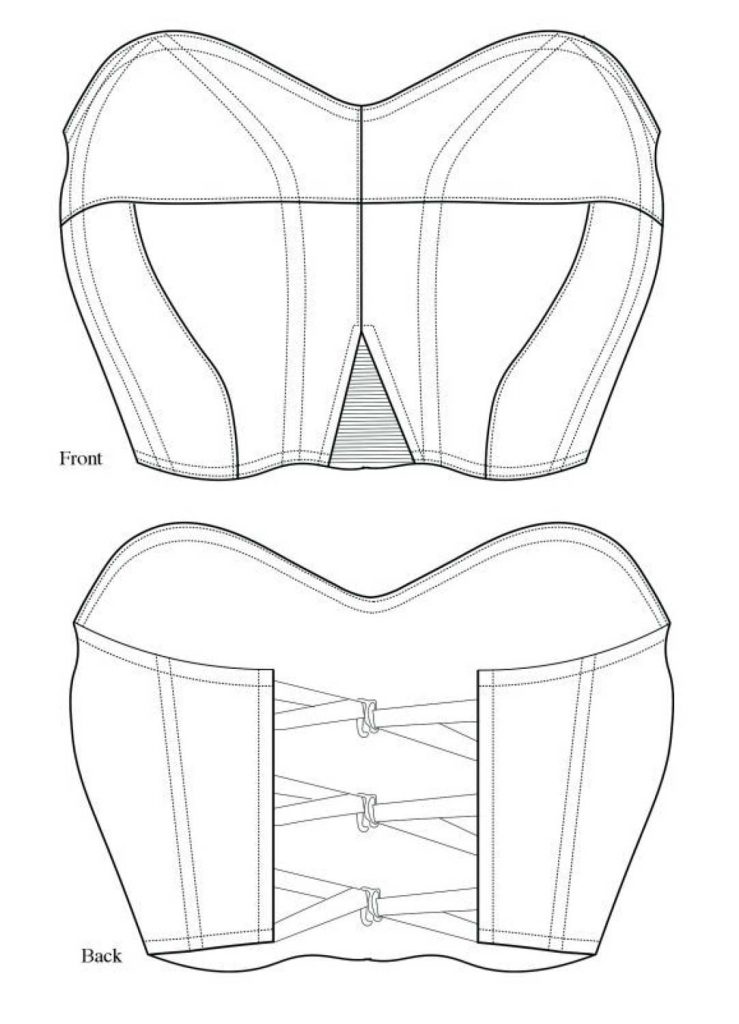
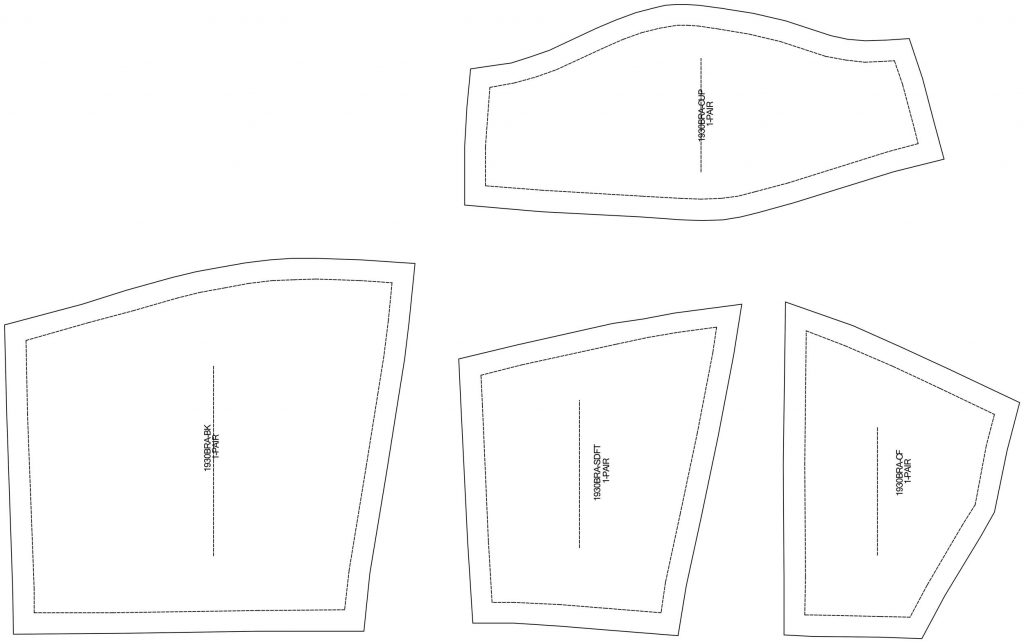
Technical illustration and garment pattern by Macarena Prada Leis, MA Pattern & Garment Technology, London College of Fashion, UAL.
The pattern is not shown to scale.
Pattern Suggestions
The shape of this bra makes it a surprisingly versatile pattern for any womenswear designer’s library. The shape is appropriate for historical underpinnings from the 1930s to the late 1950s, and it can be easily modified into a longer line bodice by extending the underbust line of the pattern down, perhaps suitable as the starting point for a gown. Rounding out the bustline and elasticating the neck and underbust edges would make this pattern suitable for a fitted strapless crop top.


Navigation
Chapter 1: Introduction, Aertex & Elastic Bust Bodice c. 1900s
Chapter 2: Satin Cathedral Bra With Celluloid Boning
Chapter 3: ‘High Line’ CC41 Cotton Bra By Kestos
Chapter 4: ‘Floating Action’ Spiral Stitch Bra By Exquisite Form
Chapter 5: Embroidered Nylon Tulle ‘Merry Widow’ By Warner