Black Silk Step In With Blonde Lace Appliqué By Chas A. Stevens & Bros
Date: c. 1920s
Origin: USA
Fabric: Silk chiffon, silk lace
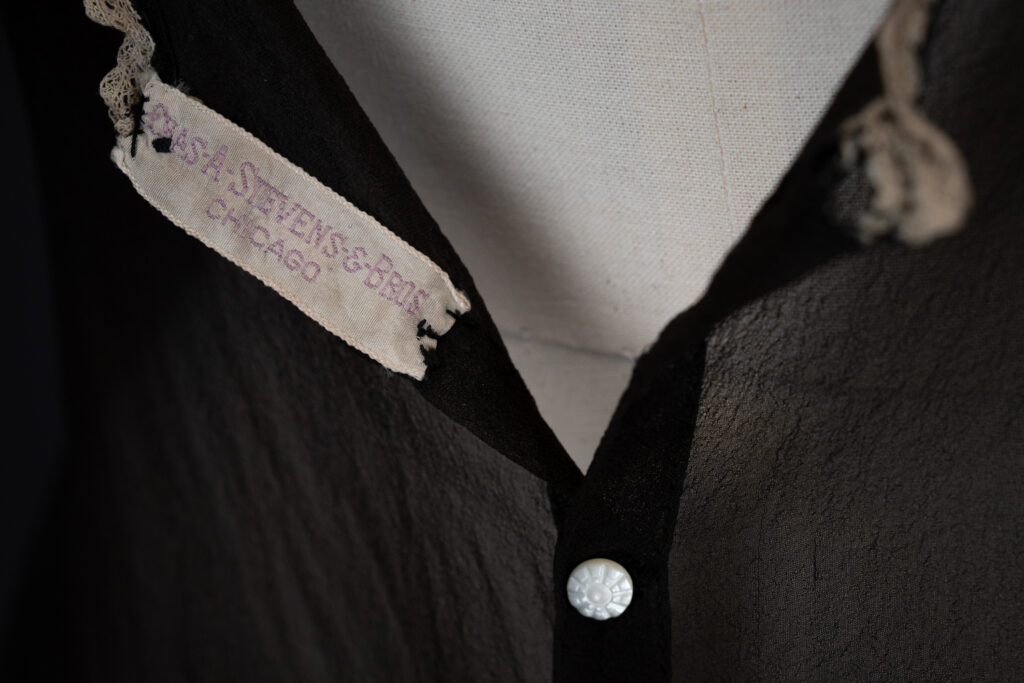
Brand: Chas A. Stevens & Bros
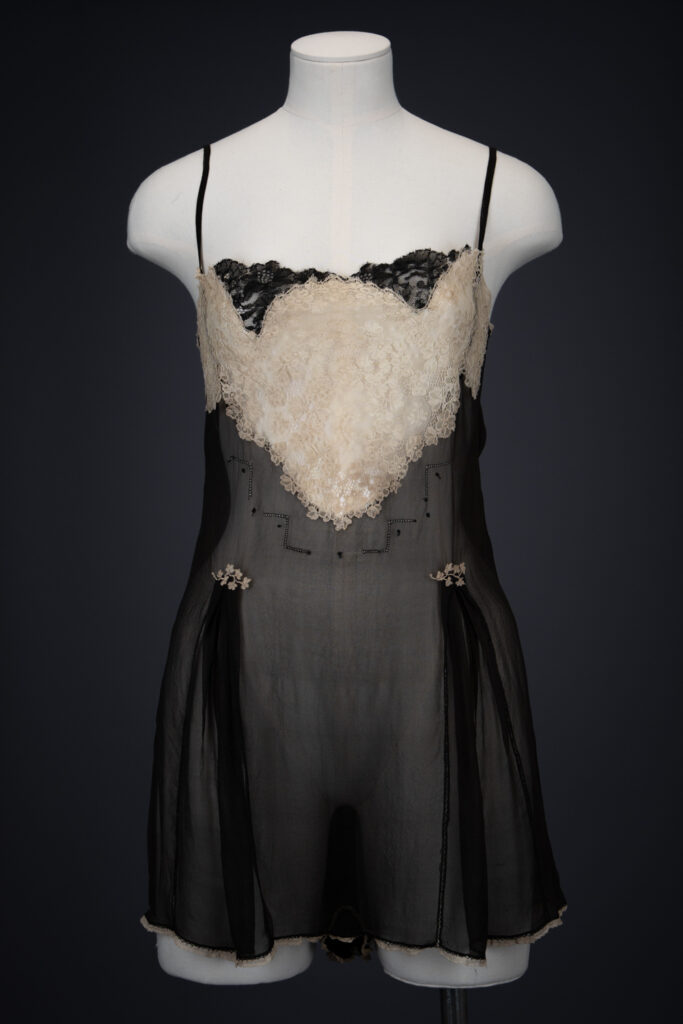
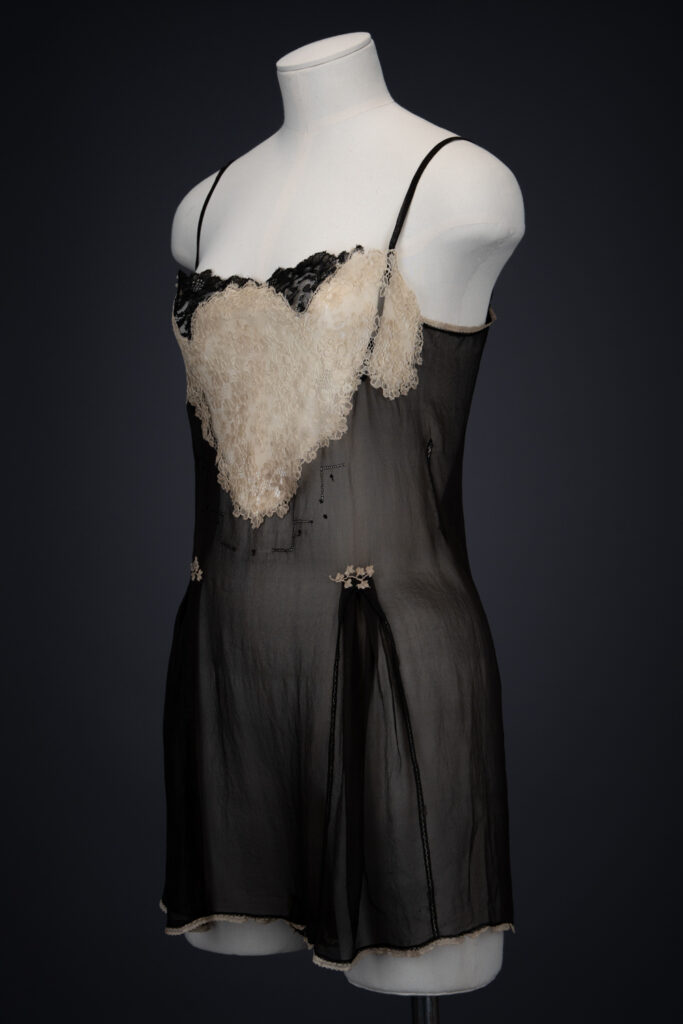
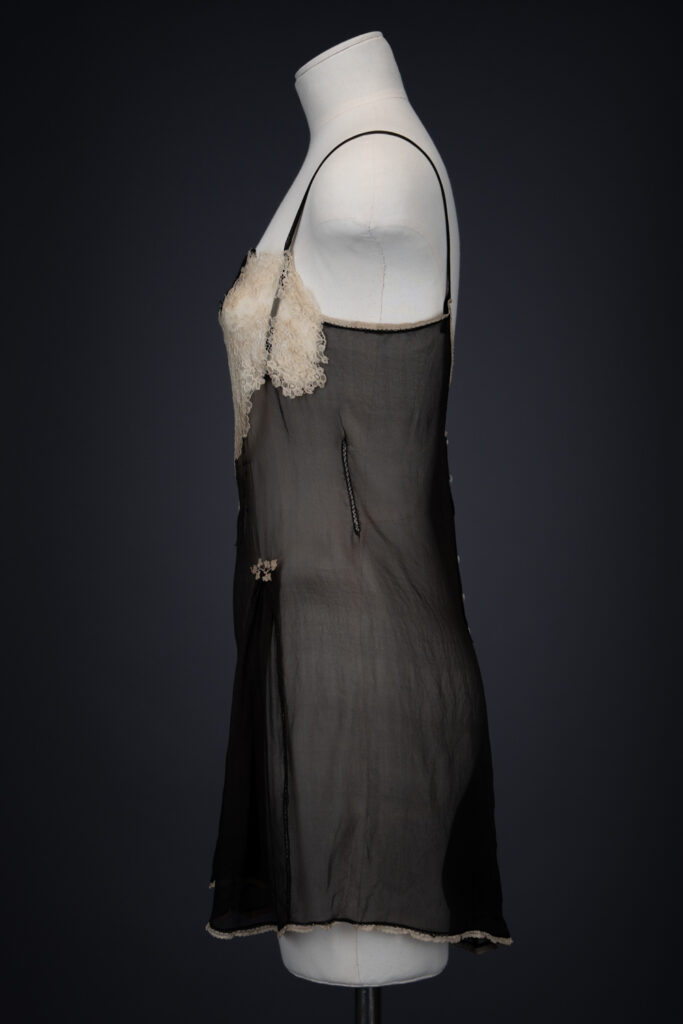
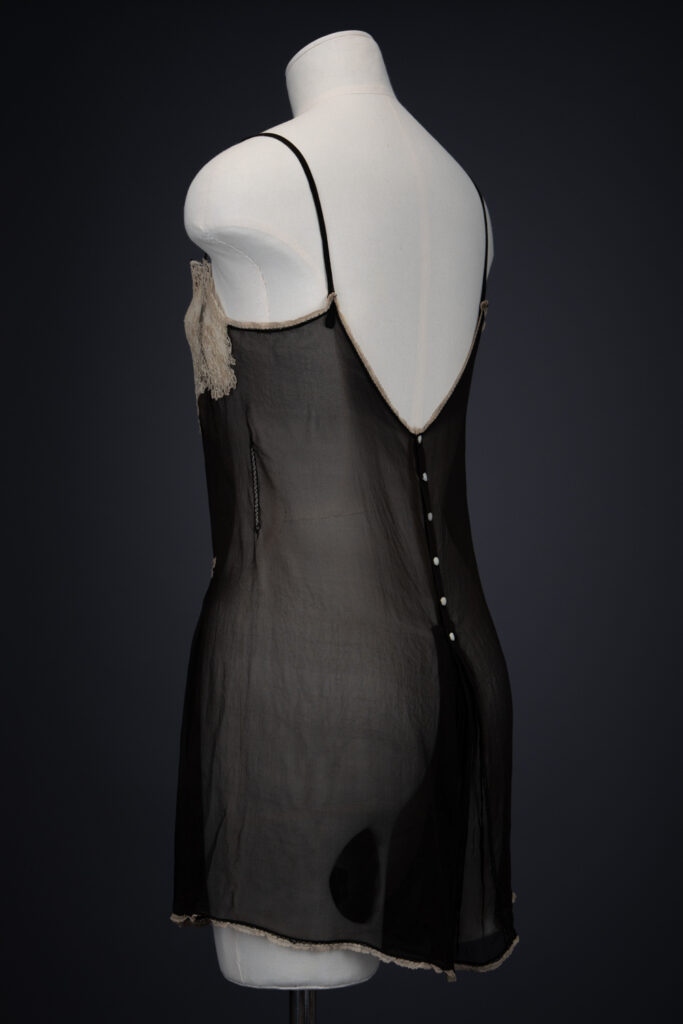
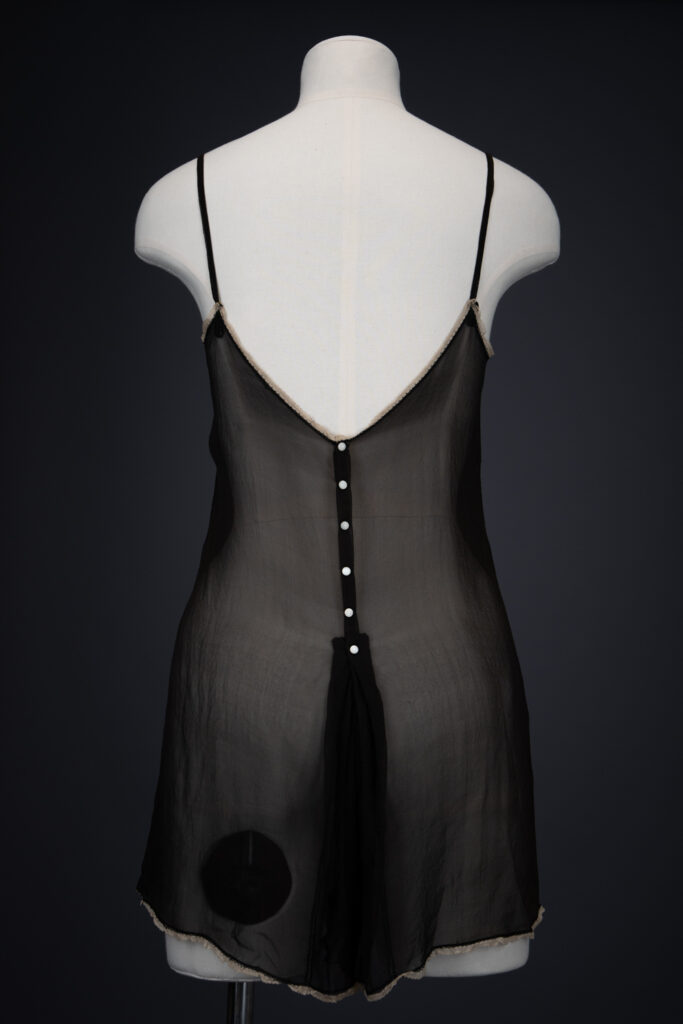
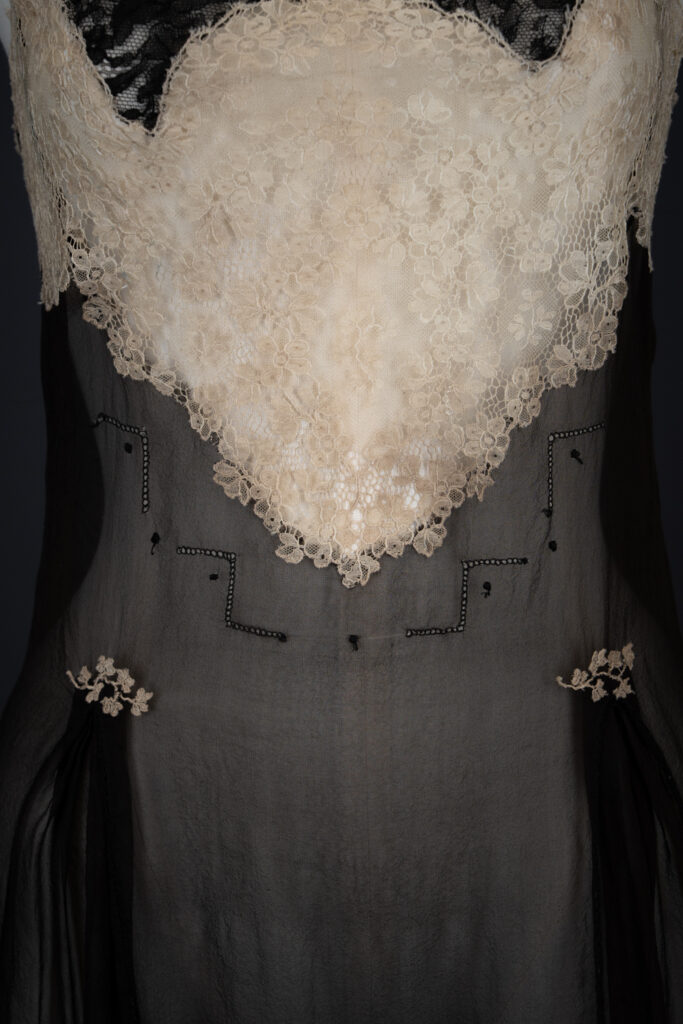
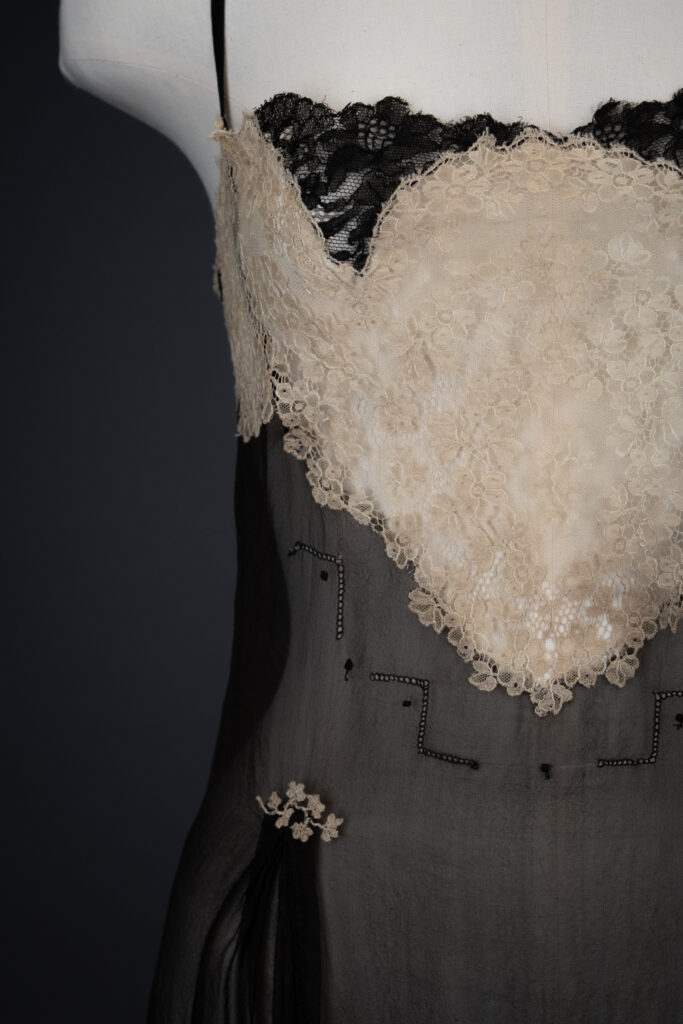
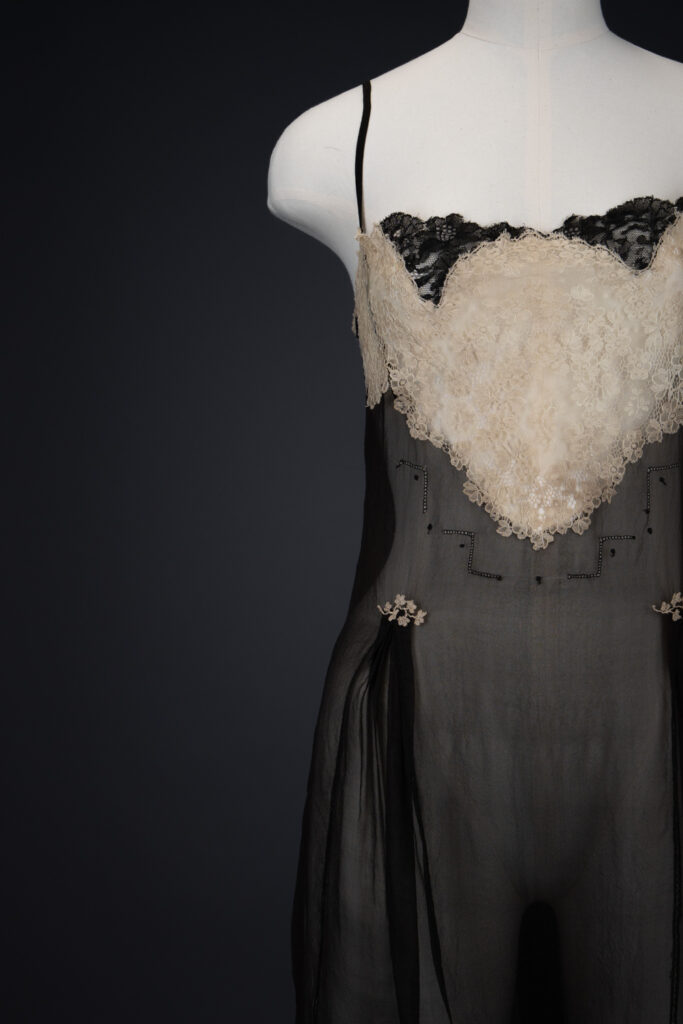
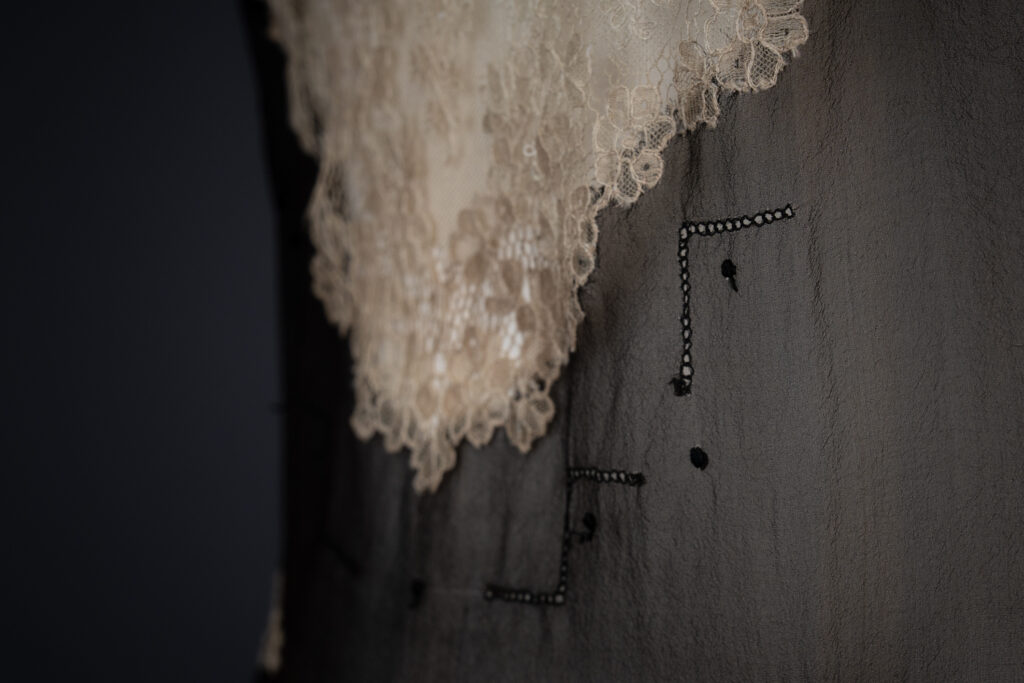
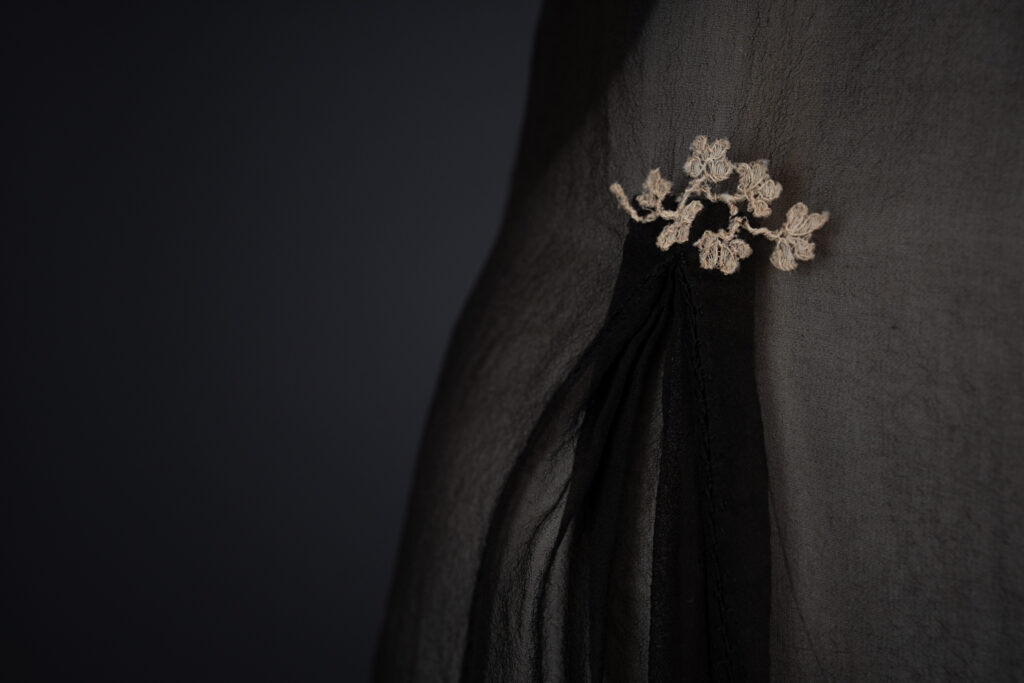
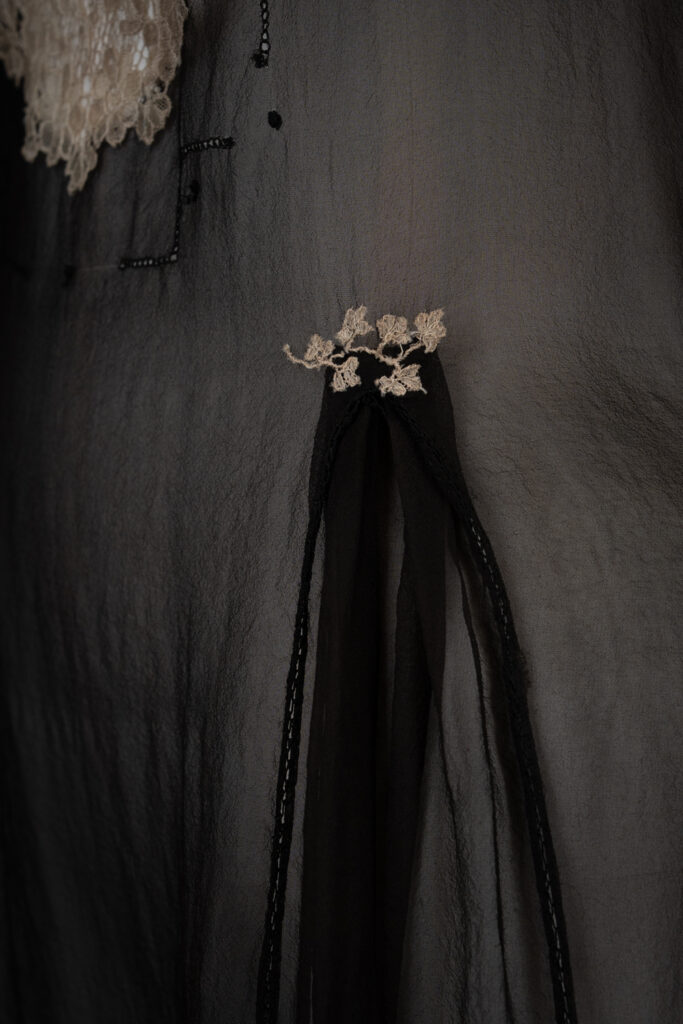
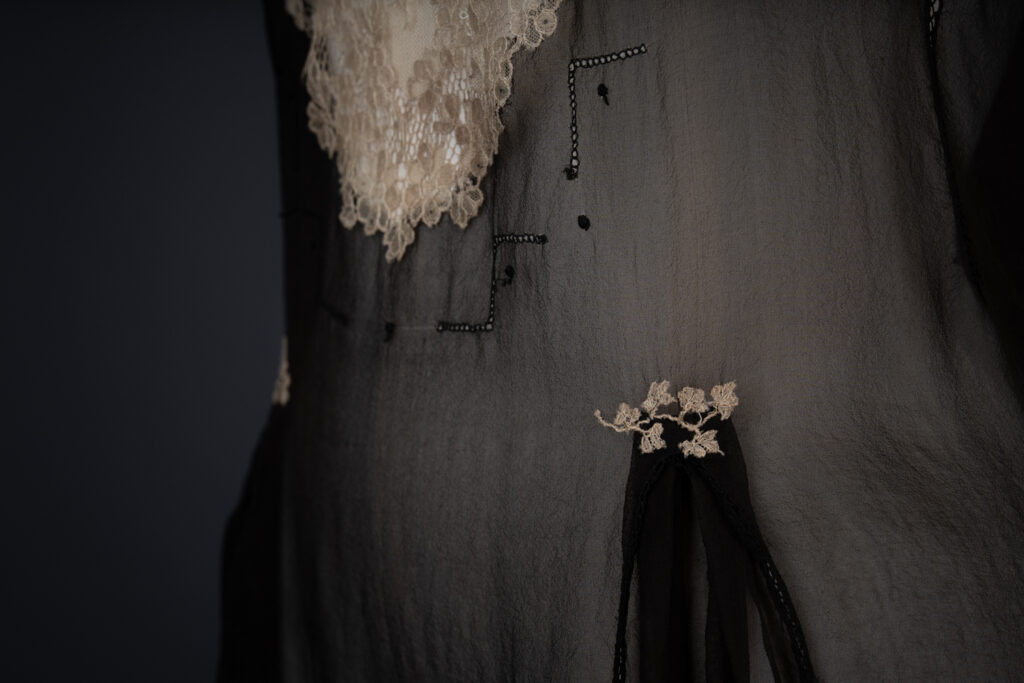
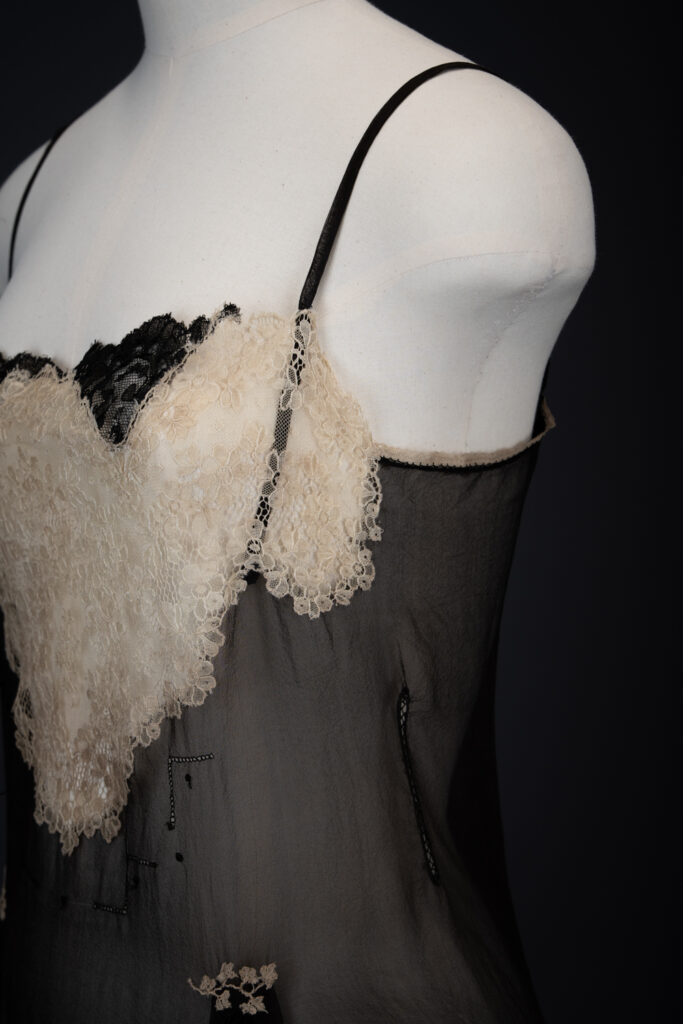
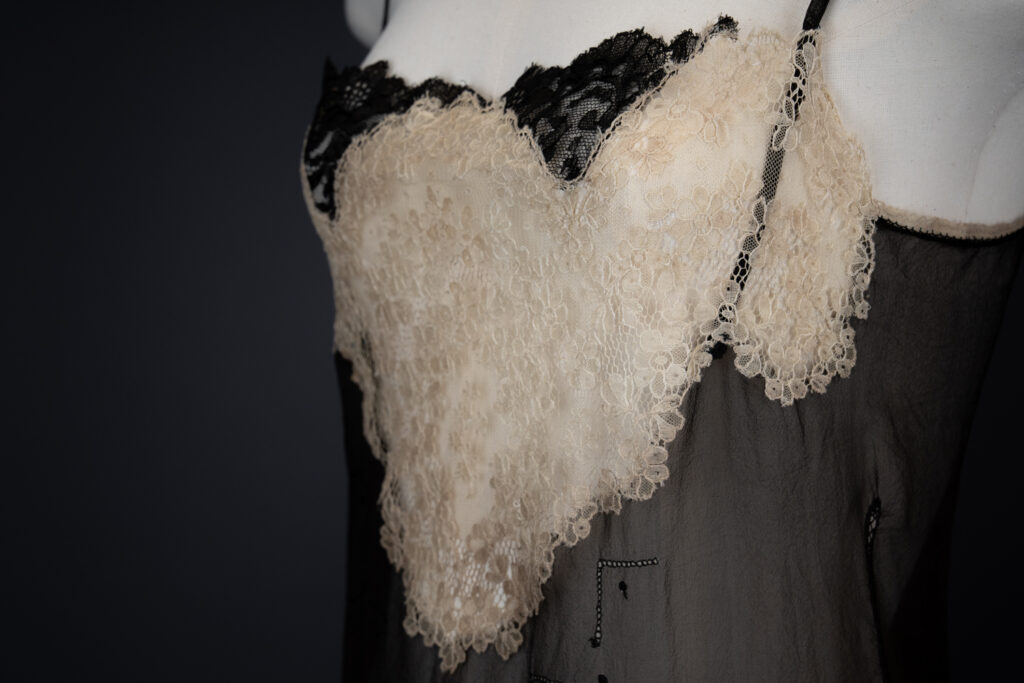
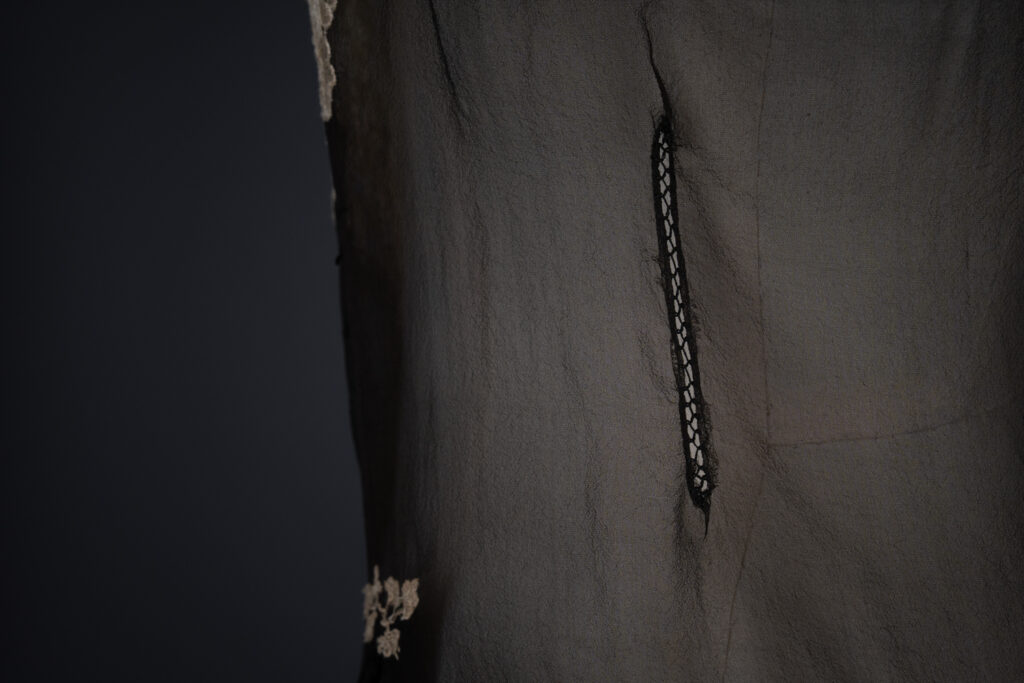
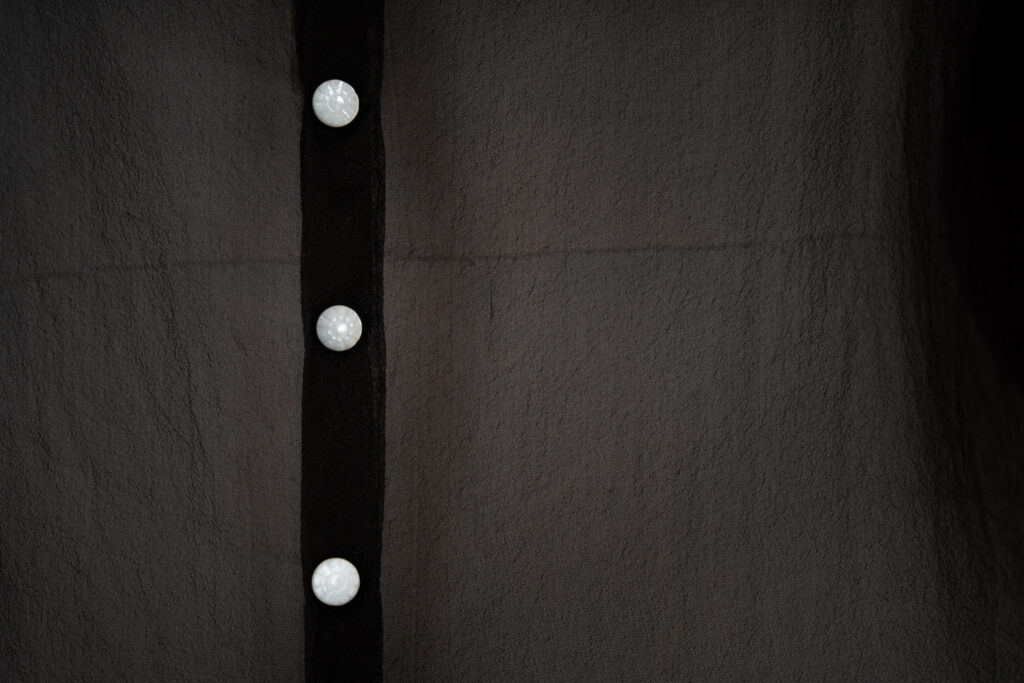
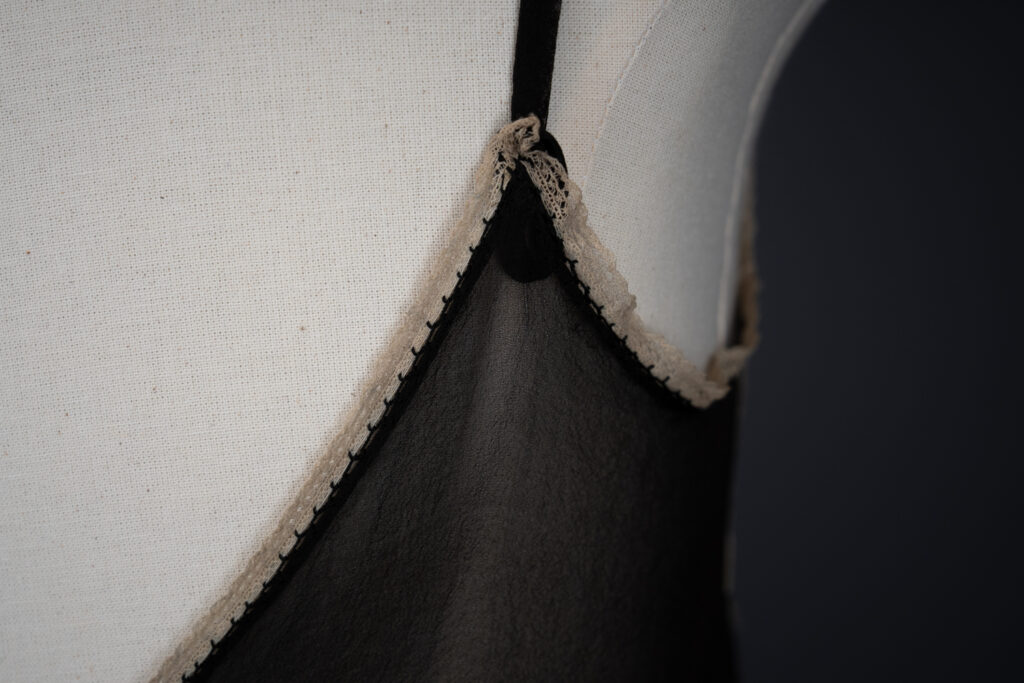
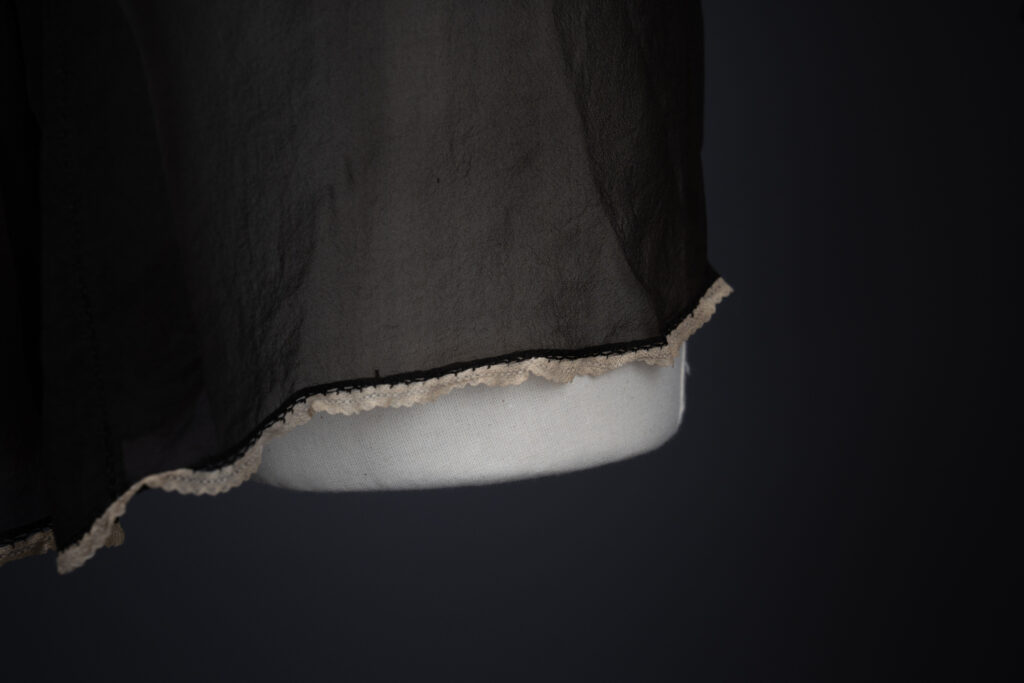
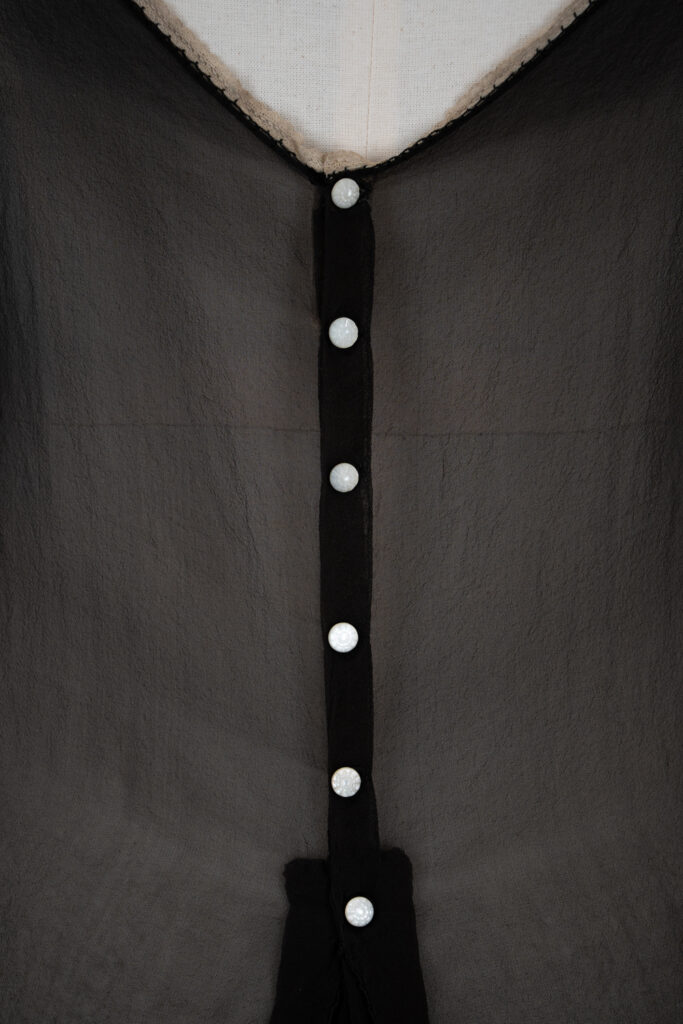
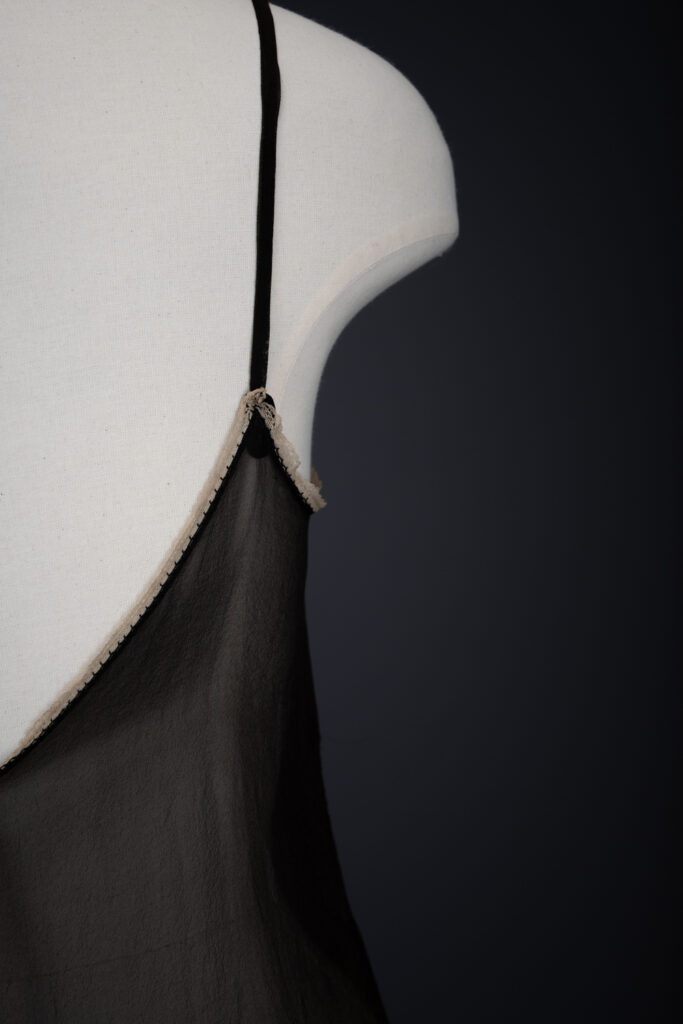
This is a circa 1920s step-in, retailed by the department store Chas A. Stevens and Bros. The bust is constructed from black and ivory lace, with floral appliqués at both hips that gather and anchor sections of black silk chiffon, which forms the majority of the garment. Beneath the lace bust area is a linear, geometric embroidery pattern, interspersed with small dots of black thread, which is likely a reflection of the Art Deco decorative arts movement of the period. The leg line is trimmed with a band of lace rendered in eggshell, and the garment is fastened at the back with six pearlescent buttons and supported by two thin black shoulder straps. The square neckline and tubular shape reflect modern fashions of the 1920s, which favored a streamlined figure over the more heavily corseted silhouettes of earlier decades.
Founded in Chicago, Illinois, in 1886, by 1903, Chas A. Stevens and Bros. claimed to be the “Largest Handler of High-Grade Wearing Apparel for Women” in America. They sold a variety of products, including cloaks, suits, furs, hosiery, and undergarments, into the 1980s.
The step-in was a women’s undergarment popular from approximately the 1910s through the 1940s. Constructed as a one-piece garment that often fastens at the crotch or up the back, it merged the functions of a slip, bra, and panty, providing a smooth foundation layer beneath clothing. The step-in became a relatively ubiquitous element of women’s underdress, through almost the entire first half of the 20th-century.
Step-ins were often rendered in lace and satin, and sometimes included abstract cut-outs, as seen in a later circa 1930s example from the Underpinnings Museum collection. Some earlier garments, such as a circa 1920s example also from the museum’s collection, are adorned with silk ribbonwork flowers.
From the collection of Karolina Laskowska.
Many thanks to Liv Elniski for the object description.
Museum number: KL-2025-006