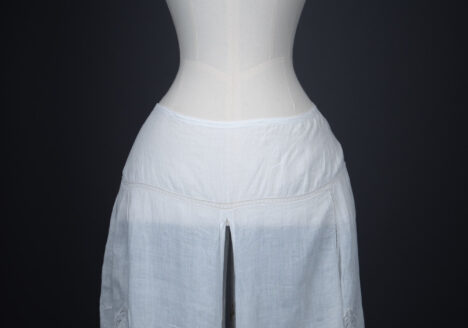
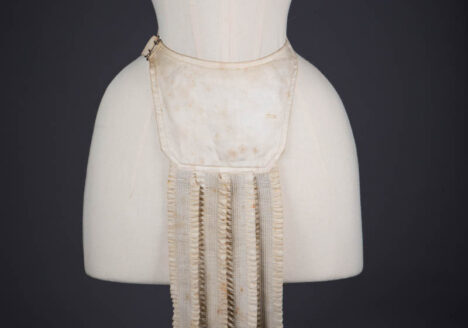
• Hand Stitched Cotton Lawn Open Drawers With Valenciennes Lace & Pin Tucks, c. 1900s. Photography by Tigz Rice. The Underpinnings Museum.

    Hand Stitched Cotton Lawn Open Drawers With Valenciennes Lace & Pin Tucks

    Hand Stitched Cotton Lawn Open Drawers With Valenciennes Lace & Pin Tucks Date: c. 1900s Origin: Unknown Fabric: Cotton lawn Brand: Unknown   These unbranded hand stitched cotton lawn open drawers with valenciennes lace and pin tucks date to approximately 1900. Across Europe and the United States, split drawers were commonly worn around, and just…
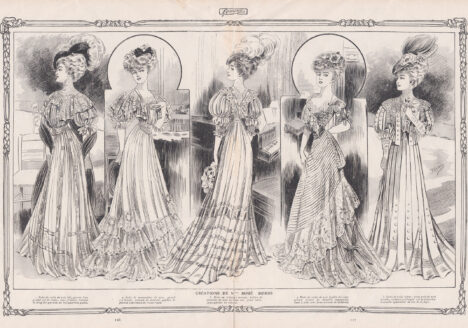
  • Illustrations Of Boué Soeurs Designs From Femina Magazine, c. 1905, France. The Underpinnings Museum.

    Illustrations Of Boué Soeurs Designs From Femina Magazine

    Illustrations Of Boué Soeurs Designs From Femina Magazine Date: c. 1905 Origin: France Brand: Boué Soeurs   This c. 1905 illustration published in the French magazine Femina showcases five dresses from the Boué Soeurs house. The dresses are all typical of the Belle Époque era, with the popular “pigeon-breasted” silhouette, also seen in an illustration…
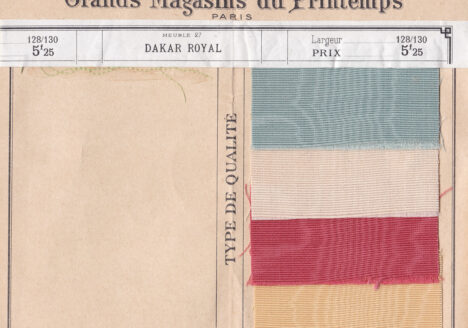
  • Moiré Silk Ribbon Samples, c. 1900s, France. The Underpinnings Museum. Photography by Tigz Rice

    Moiré Silk Ribbon Samples

    Moiré Silk Ribbon Samples Date: c. 1900s Origin: France Fabric: Silk Brand: Grands Magasins de Printemps   This set of silk moiré ribbon samples, from the French department store Grands Magasins de Printemps, dates from the early 20th century. There are four colours for the buyer to choose from - blue, white, red, and yellow.…
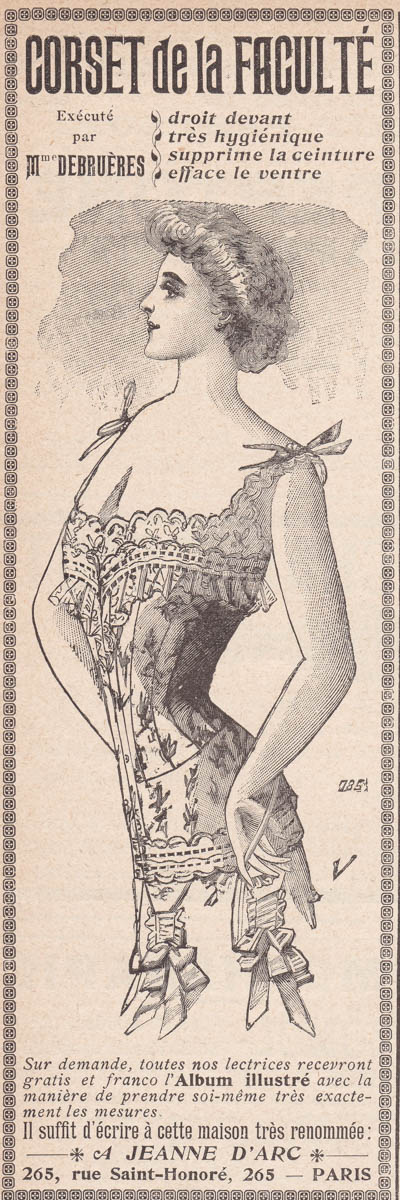
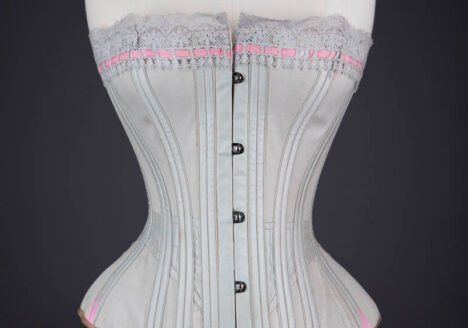
  • 'Corset De La Faculté' Corset Advertisement, 1901, France. The Underpinnings Museum.

    ‘Corset De La Faculté’ Corset Advertisement

    'Corset De La Faculté' Corset Advertisement Date: 1901 Origin: France Brand: Mme Desbruères   This is an advertisement for the Corset de Faculté (“faculté” could potentially be translated to freedom, competence, power or faculty in English). Created by Madame Desbruères, the advertisement boasts that this corset is “straight fronted, very hygienic, suppresses the waist, and…
  • 'The Foster' Hose Supporter, c. 1900s, USA. The Underpinnings Museum. Photography by Tigz Rice.

    ‘The Foster’ Hose Supporter

    'The Foster' Hose Supporter Date: c. 1900s Origin: Great Britain Fabric: Cotton sateen, elastic Brand: The Foster Hose Supporter Co.   This is a hose supporter, made from cotton sateen, elastic, and metal clasps. These were a separate accessory, worn over the corset or shirtwaist and used to keep stockings or hose up, similar to…
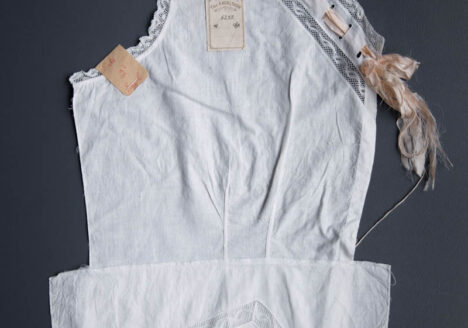
  • Cotton Lawn Corset Cover Half Samples By The Excelsior, c. 1880-1900s, Great Britain. The Underpinnings Museum. Photography by Tigz Rice

    Cotton Lawn Corset Cover Half Samples By The Excelsior

    Cotton Lawn Corset Cover Half Samples By The Excelsior Date: c. 1880-1900s Origin: Great Britain Fabric: Cotton lawn, machine lace, silk ribbon Brand: The Excelsior   This is a series of seven half samples of cotton corset covers from the 1880s-1900s, manufactured by the brand Excelsior. These samples are each the right half of the…
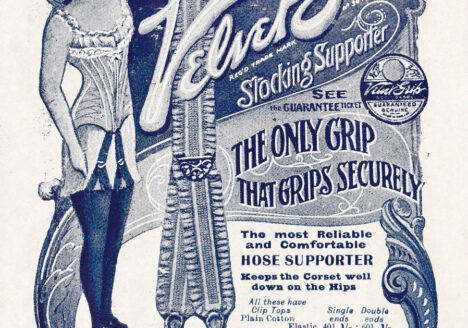
  • 'The Ladies' Grip' Advertisement By Velvet Grip, c. 1900s, Great Britain. The Underpinnings Museum

    ‘The Ladies’ Grip’ Advertisement By Velvet Grip

    'The Ladies' Grip' Advertisement By Velvet Grip Date: c. 1900s Origin: Great Britain Brand: Velvet Grip   This advert is for stocking and hose supporters by H. W. Velvet Grip. H. W. Velvet Grip Manufacturers were established in Great Britain in or around the year 1895. When the company participated in the 1900 “Woman's Exhibition”…
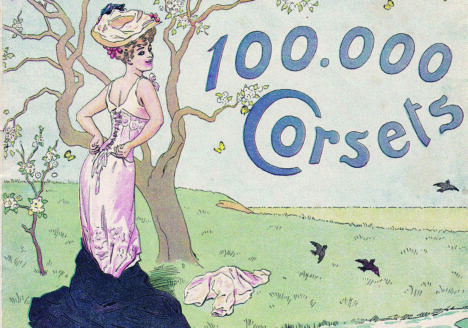
  • 100.000 Corsets Catalogue, c. 1900s, France. The Underpinnings Museum

    100.000 Corsets Catalogue

    100.000 Corsets Catalogue Date: c. 1900s Origin: France Brand: 100.000 Corsets   Inside this catalogue for the brand ‘Aux 100,000 Corsets,’ founded circa 1890, are twelve corset models exemplifying the height of fashion during the early twentieth century. Unlike most nineteenth-century corsets, none of these models encompass the bust, focusing their structural support at the…
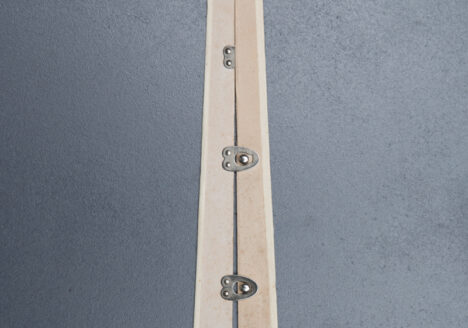
  • Tapered Corset Busk, c. 1900s. The Underpinnings Museum. Photography by Tigz Rice

    Tapered Corset Busk

    Tapered Corset Busk Date: c. 1900s Origin: Unknown Fabric: Steel Brand: Unknown   An unusual corset busk fastening. It has a tapered shape, and in place of the traditional loop/pin shape in the second loop down, it has a solid metal tab that tucks behind the busk when closed. Theories for this unusual fabrication include…
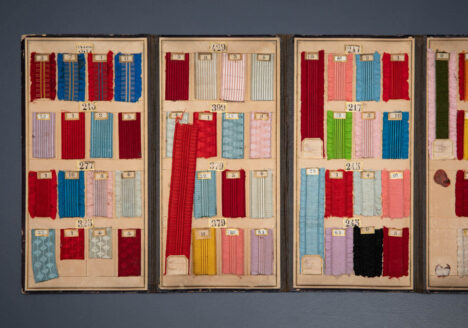
  • Silk Elastic Sample Book, c. 1900-1910s. The Underpinnings Museum. Photography by Tigz Rice.

    Silk Elastic Sample Book

    Silk Elastic Sample Book Date: c. 1900-1910s Origin: Unknown Fabric: Silk and rubber Brand: Unknown   A sample book of various elastic trims c. 1900-1910s. Elastication was still a relatively new technology, and these trim options offered makers of all varieties of clothing exciting possibilities. These elastics were created from rubber cores wrapped in fabric…